Showing posts with label Paul Naschy. Show all posts

Sunday, March 23, 2014

INQUISITION

Paul Naschy, 1976
Starring: Paul Naschy, Daniela Giordano, Mónica Randall

Bernard de Fossey, a witch hunter, arrives at a plague-ridden town in the countryside with some colleagues. He quickly falls for a nobleman’s daughter, Catherine. Meanwhile, he is off busily accusing, imprisoning, torturing, and executing suspected witches. When Catherine’s fiancé is killed, she believes the inquisitors are responsible and makes a pact with Satan to get the ultimate revenge on de Fossey and his friends. She uses their developing romantic relationship to manipulate and damn him, learning too late that things may not be as they seemed… 

Spanish horror maestro Paul Naschy wrote, directed, and starred in Inquisition — it was actually his directorial debut. Seeing as Naschy made so many different types of horror films — he starred as Dracula, the Wolfman, a mummy, a Gilles de Rais-type medieval Satanist and murderer, a hunchback, voodoo master, and more — that it was only inevitable that he eventually tackled the witch hunting subgenre that rose to popular in the mid-‘60s with films like Witchfinder General, Mark of the Devil, Cry of the Banshee, and more. 

This is a surprisingly good entry in the Naschy canon. While I typically recommend his films only to Eurohorror fans, anyone who enjoys witch hunting movies should check it out. For this script, Naschy actually did quite a bit of research and based his story on a real tale from medieval France. A magistrate/inquisitor fell in love with a woman suspected of witchcraft. They were found out and burned at the stake. As with Vengeance of the zombies, there are few dialogue heavy scenes where the characters explain witchcraft and satanism in detail. I can’t decide if these are interesting or simply too much, but if you’re a newbie to the witch hunting sub-genre or have never read anything about the medieval witch hunts, you may find it fascinating. 

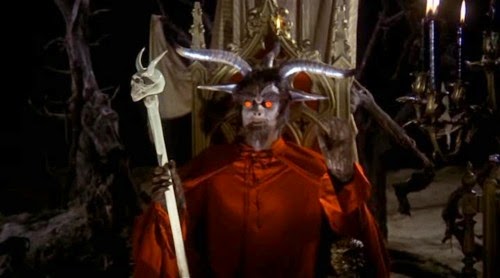
Though the atmosphere isn’t quite as effective as some of his other films, there are still some interesting sequence, including one where Catherine picks up a skull that is actually covered in maggots. As with Vengeance of the Zombies, there are hellish dream sequences depicting Satan; in one particularly nice moment, he drinks blood from a human skull. Naschy, of course could not miss out on the chance to appear in a second role as the Prince of Lies. 

While it may not have the force of atmosphere of some of his other film, it does manage to capture a realism not usually found throughout his work. Inquisition also doesn’t shy away from depicting the poverty and general misery of medieval life, particularly during a plague epidemic. There is a fair amount of nudity and toplessness in this film, but several shots of topless female plague victims is somewhat disturbing. There are also plenty of effective torture scenes and based on these, I think this has probably the best use of effects out of any Naschy film. There’s also a lot of nudity. Though much of it is mixed with violence (the torture scenes), there’s a more tranquil shot where four naked women are splashing out in a lake. 

As with Cry of the Banshees, this is a rare witch hunting film from the period that depicts actual witches. In Inquisition, they are depicted as primarily benevolent until the wholesale torture and suspecting witch killing drives them to further action, which includes making pacts with Satan. Satan does actually deliver vengeance for Catherine, but in the end he is disappointingly unable to vanquish the powers of God. 

While it steals some plot elements from other witch hunting films, such as the doomed central romance from Witchfinder General, Naschy’s de Fossey is sympathetic. His love for Catherine humanizes him, though there can’t be a Naschy film without at least one female character falling in love with him. 

There are some decent appears from genre actors, including Mónica Randall (The Witches’ Mountain), Ricardo Merino (Trauma), Tony Isbert (Rest in Pieces), and Eduardo Calvo (House of Psychotic Women). Naschy regular Julia Saly (Night of the Werewolf) is particularly lovely and leading lady Daniela Giordano (Gently Before She Dies) has decent chemistry with Naschy during their scenes together. 

This is one of Naschy’s most violent films and is relatively on par with the infamous Mark of the Devil, though Naschy’s effects are cheaper. There is a nice scene of nipple removal and some other mayhem. Between Lucio Fulci, Burial Ground, Inquisition, and others, the ‘70s were a rather unpleasant time for nipples in Italy and Spain. It comes recommended for all fans of witch hunting movies and Eurohorror in general. There is no English-dubbed or subtitled DVD available, though you can find Inquisition online. 

Friday, March 21, 2014

THE MUMMY'S REVENGE aka LA VENGANZA DE LA MOMIA


Carlos Aured, 1973
Starring: Paul Naschy, Jack Taylor, Maria Silva, Helga Line

In ancient Egypt, the bloodthirsty Pharaoh Amenhotep is killed by the High Priest of Amen-Ra, because he and his consort Armana have been torturing and sacrificing young women. His crimes also include drinking the blood of virgins and eating the flesh of his citizens. Amenhotep is cursed to never enter the afterlife and doomed to become a mummy. Many years in the future, archaeologists dig up his tomb and accompanying scrolls and take them back to the British Museum in London.

He is followed by Egyptian professor Assad Bey, who claims he is interested to learn more about Amenhotep’s legend. Really Bey and his female colleague Zenifer are descendants of Amenhotep and Armana, there to resurrect the mummy and his lady love. To do this, they must pick up where Amenhotep left off and sacrifice 42 virgins, then mix their blood with the sacred leaves that will reawaken Amenhotep. They must also find a young girl’s body to use for Armana’s reincarnation. An archaeologist from the museum and his girlfriend eventually clue in to Bey’s activities and set out to stop the mummy.

Mummy films aren’t the most popular sub-genre in horror and Karl Freund’s original The Mummy has been remade or adapted fewer times than most of the other entries in the Universal monster canon. Likely this is due to the fact that the monster is slow and shuffling, and the plot is little more than a reworking of Dracula. But Spanish horror icon Paul Naschy – who had made his career as the Wolfman and also starred as Dracula, a Hunchback, Gilles de Rais, and a voodoo master, among others – decided to give The Mummy his own turn and he appears here and writer and star.

As with some of his other films, namely Horror Rises from the Tomb and Vengeance of the Zombies, Naschy plays multiple roles with aplomb. Though Boris Karloff also did this in The Mummy, it’s refreshing that Naschy provides a totally new take on the character. Rather than a doddering, if malevolent occult dabbler with a broken heart, his ancient mummy is sadistic, bloody thirsty, and only bent on reincarnating his mistress because her penchant for cruelty matches his own.

Naschy and co-star Helga Line had already starred together as the murderous, Satan worshipping couple in Horror Rises from the Tomb. Here they somewhat repeat those performances, as the two plot are very similar, but The Mummy’s Revenge feels fresh enough thanks to the Egyptian themes. Naschy’s take on the mummy is also entirely his own. On one hand, Amenhotep looks more like a burn victim than a thousand-plus year old mummy. On the other hand, his mummy is extremely violent and athletic, chasing down young virgins and smashing skulls with ease. As with Hunchback of the Morgue, Naschy’s character spends the second half of the film going on a full-tilt rampage and killing anyone with an intact hymen he can get his hands on – and a few others for good measure.

There’s a lovely scene where the police chase him through Hyde Park. With its fog-shrouded shadows and Universal horror-like imagery, it’s somewhat reminiscent of the later scenes from Dr. Jekyll and the Wolfman. The numerous museum set pieces are also impressive and take advantage of such things as a room filled with suits of armor, dark corners, and massive pillars. This was his final film with director Carlos Aured and while I think Blue Eyes of the Broken Doll is their best film together, this is more entertaining than it has any right to be. They make good use of the supposedly Victorian London set (a common feature on several Naschy films), beautiful women, and loads of atmosphere. The Egyptian costumes are pretty kitschy, but in an amusing way, and Helga Line looks wonderful in them.

Why is Jack Taylor (the archaeologist) wearing so much eyeliner? He is equally flat and surprised looking as he was in Dr. Jekyll and the Werewolf, but the script here gives him more improbable action, such as beating the crap out of Naschy, and ridiculous dialogue. His costar, Maria Silva (Curse of the Devil), is lovely, but gives a performance that is equally wide-eyed and campy.

There is a PAL DVD of The Mummy’s Revenge, but nothing NTSC or region 1 as far as I’m aware. You can find the film online, though it really only comes recommended to Paul Naschy lovers or mummy completists. Though if you’ve always wanted to see a mummy go buck wild, now’s your chance.

VENGEANCE OF THE ZOMBIES aka LA REBELIÓN DE LAS MUERTAS


León Klimovsky, 1973
Starring: Paul Naschy, Romy, Mirta Miller, Maria Kosty

After women are killed around England, they are raised from the dead by a mysterious masked man. He uses them as murder weapons, to get vengeance on miscellaneous men for some unknown offence. Meanwhile, an Indian guru, Krisna, and his girlfriend travel from London to an isolated estate with one of their followers, a troubled young woman named Elvira. While Krisna is attempting to help the smitten Elvira, Scotland Yard is investigating the string of zombie-murders. The detectives, with the help of an occult expert, figure out that the murders are somehow based around Krisna’s estate.

Bizarre and delightful, Vengeance of the Zombies doesn’t make a whole lot of sense, but it really is a lot of fun. Fans of Eurohorror will definitely want to seek this out, though anyone who expects a rational plot is probably going to be confused or disappointed. Star and writer Paul Naschy is great in three roles here – as the guru Krisna, a pretty racist and kind of creepy Indian stereotype, as an incredible looking Satan, and as Krisna’s evil, deformed brother Kantaka. Though it isn’t clear until closer to the end of the film, he is responsible for the wholesale slaughter. Kantaka wears a mask for much of his screentime, so his burn scars (and resemblance to Krisna) aren’t evident till late in the game. He is certainly one of the more entertaining characters and nearly every single one of his scenes involves murder, black masses, voodoo rituals, and other kinds of insanity.

If, like me, you absolutely love voodoo-themed zombie films, then Vengeance of the Zombies is for you. Make no mistake, it is wildly entertaining, though in a so-bad-it’s-good and unintentionally hilarious way. There’s some truly incredible dialogue, rivaling some of the better lines from A Dragonfly for Each Corpse. One of the zombies kills someone with a soda can and there’s some other unexpected gore. Scotland Yard is amusingly accepting of the zombies’ existence and they are essentially only in the film to intercede in the sadly lame and predictable ending.

Along with Live and Let Die and Sugar Hill, voodoo deity Baron Samedi is a presence. The script is a bit confused about what tradition it’s following and blends Satanism, Kali worship, and voodoo together. Allegedly, after seeing the film, some people were so convinced that they reached out to Naschy and asked him to be their cult leader. I have a little trouble believing that, but the scenes of Satan worship do look pretty wonderful.

There’s some great atmosphere here. The black-clad female zombies were clearly designed with cheap effects, but their movements are surprisingly effective. As with the female vampires in Naschy’s Werewolf Vs the Vampire Woman and Count Dracula’s Great Love, the zombies move in slow motion, often through fog and shadows, giving their scenes a feeling of eeriness. The dream sequences are also quite incredible, featuring Naschy as a grinning, oppressive Satan with some great make-up, demons, a woman painted gold and stirring a cauldron, and more strangeness.

There are some nice scenes surrounding the supposedly cursed “Devil House,” which is where Elvira has her nightmares. For the most part, they are unexplained, but I assume that they came from the house, much like the excellent British film Curse of the Crimson Altar from just a few years prior in 1968. Vengeance of the Zombies shares enough plot elements with that film that Naschy must have seen it and been inspired by it. On a similar note, Naschy’s obsession with Universal horror made me think of the underrated Bela Lugosi-vehicle Night Monster (1942), which also involves a swami and some mysterious occult horror that takes place in a manor house in the isolated countryside.

Naschy regulars Mirta Miller (Count Dracula’s Great Love), Aurora de Alba (The Mark of the Wolfman), and Antonio Pica (Blue Eyes of the Broken Doll) all put in decent performances, and Romy (The Killer with a Thousand Eyes) is nice to look at. Her character, Elvira (the name of Naschy’s wife and several of his female characters over the years), honestly seems pretty useless throughout the film. Though the action often comes to her – as well as some pretty incredible nightmares – she doesn’t do a whole lot other than look pretty or distressed.

Vengeance of the Zombies is far from perfect. Naschy’s script, as always, is completely incoherent and there are some dull parts, primarily when the detectives sit around Scotland Yard discussing the case. The soundtrack from Juan Carlos Calderon is absolutely insane. Whether Naschy intended to take this film seriously or not, the soundtrack completely prevents that with some funky, jazz-fueled interludes delivered at exactly the wrong times – or the right times, if you’re looking for a laugh.

Somewhat surprisingly, considering its obscurity, Vengeance of the Zombies is available on both DVD and Blu-ray; the Blu-ray is a double feature with Night of the Werewolf. It comes highly recommended to fans of Naschy, Spanish and Eurohorror, and anyone who likes nonsensical genre films. Parts of this film must be seen to be believed.  

Thursday, March 20, 2014

HUNCHBACK OF THE MORGUE aka EL JOROBADO DE LA MORGUE


Javier Aguirre, 1973
Starring: Paul Naschy, Rosanna Yanni, Victor Alcázar

Gotho, a hunchback working at the morgue (as you may have guessed) is in love with Ilse, a sickly young woman who is kind to him in return. She soon dies, though Gotho believes she is only sleeping because of his limited mental faculties. When they attempt to autopsy her at the morgue, Gotho has a violent meltdown and commits murder. He is forced to go into hiding in the city’s catacombs to avoid the police. Soon he meets Dr. Orla, a scientist at a nearby hospital.

Orla agrees to revive Ilse if Gotho will help him find bodies for his unsavory experiments, and soon moves his equipment into Gotho’s underground lair. Meanwhile, a kind, lovely doctor named Elke begins to fall for Gotho and they strike up a relationship. Instead of stitching together pieces from dead bodies, Dr. Orla feeds human heads to a mysterious creature in glass tank. Of course Gotho must face off against this beast during the film’s insane conclusion.

One of star and writer Paul Naschy’s most popular and beloved films, Hunchback of the Morgue is another of his riffs on the classic Universal monster, though this script has an inspired twist, as it combines two stories into one. There are many elements of Hunchback of Notre Dame present, namely an ugly, violent, and unintelligent hunchback who loves a doomed woman. Naschy blends this with Mary Shelley’s Frankenstein and Universal’s filmic adaptation of the novel: a mad scientist uses his hunchbacked-assistant to gather up corpses and build a monstrous creature.

Gotho the hunchback is one of Naschy’s most memorable characters (despite the awkward wig). He is sweet and caring with the film’s two leading ladies, but is also capable of some real ferocity. Of course plenty about his character is implausible, namely the fact that he manages to strike up a relationship with Elke. In all of his films, Naschy’s characters are inexplicably irresistible to women, often resulting in some unintentional comedy. Let’s not forget about the hunchback sex that occurs during the film. Though this isn’t the most erotic of his films (that honor probably goes to Count Dracula’s Great Love), there is some implied necrophilia, whipping, foot worship, and some other mild kinkiness.

This is certainly also one of Naschy’s goriest films and features plenty of spilled blood, including scenes of corpse play, decapitation, dismemberment, and even a body dumped in acid. There was also (according to IMDB) allegedly the use of a real corpse for part of the film, though it repulsed Naschy so much he had to go back to using a dummy. Animal lovers should be forewarned – there is a scene where rats are actually set on fire.

Director Javier Aguirre, who worked with Naschy on Count Dracula’s Great Love, again brings back a powerful sense of atmosphere that is critical to the film’s success. The scientist’s lab, crypt-like lair in the catacombs with torture implements and old bones, and decent effects all make the film worth watching. The film seems to be set in a German or Eastern European town and has a wonderful Gothic flavor full of picturesque houses, dark alleys, and some other nice visuals.

As with many of Naschy’s films, there are a number of genre regulars, including Maria Elena Arpon (Tombs of the Blind Dead) who sportingly let rats climb all over her, Antonio Pica (Blue Eyes of the Broken Doll), the sexy Rosanna Yanni (Count Dracula’s Great Love) as Gotho’s implausible girlfriend, and Manuel de Blas (Vampires’ Night Orgy). Jess Franco regular Albert Dalbes (Cut-Throats Nine) shines as Dr. Orla and chews scenery with gusto.

Hunchback of the Morgue is one of Naschy’s best paced films, though, as with all the others, the script is far from perfect. There’s some hilarious dialogue, nonsensical scenes, and characters doing things they shouldn’t, but this is definitely one of his most entertaining films. It’s Eurohorror, so it doesn’t really have to make sense. It comes highly recommended and fortunately Hunchback of the Morgue is available on DVD. While this will be of interest to all Eurohorror fans, Naschy newbies might also want to check it out. If you’ve seen one of his El Hombre Lobo films and were disappointed, this might just change your mind.

Wednesday, March 19, 2014

BLUE EYES OF THE BROKEN DOLL aka LOS OJOS AZULES DE LA MUNECA ROTA


Carlos Aured, 1973
Starring: Paul Naschy, Diana Lorys, Maria Perschy, Eva Leon

Gilles, a drifter and convicted rapist, arrives in a rural French village and finds work in an isolated mansion owned by three sisters. The eldest and head of the family, Claude, has a prosthetic hand and an uptight personality. Her other two sisters are equally troubled – Yvette is in a wheelchair and Nicole is a nymphomaniac. Gilles is not the only newcomer, as Yvette’s nurse disappears and is replaced with a recommendation from her doctor, who believes Yvette’s condition is psychosomatic. Several years ago their parents died in a mysterious accident, which traumatized the three sisters psychologically and physically. Gilles begins sexual relationships with Claude and Nicole, while a black-gloved killer is murdering women with blue eyes, then stealing and preserving the eyes. Gilles is the main suspect and the local police begin to hunt him down, even though Claude is convinced of his innocence.

Italian giallo films and Spanish horror are two of my favorite sub-genres and this Paul Naschy vehicle is an interesting, successful blend of the two. Though Naschy attempted to make other Spanish giallo films – Seven Murders for Scotland Yard and A Dragonfly for Each Corpse, for example – this effort is by far the most entertaining and cohesive. 

Blue Eyes of the Broken Doll isn’t as openly weird or subversive as some of the other Spanish horror films from the time (such as A Bell from Hell, for example), but it does have some surreal, nonsensical elements. It is a solid giallo and ranks as one of Naschy’s most accessible films. This is one of many movies that he starred in and also wrote or co-wrote, several of which are a complete mess in terms of the script. Certain elements are taken from early Italian entries like Bird from the Crystal Plumage, but, in an interesting twist, the focus here is less on the black-gloved killer and more on the mounting hysteria between the three sisters, giving the proceedings more of an exploitation feel. 

This quickly paced film has one or two confusing plot jumps and some weird flashbacks, but is full of enough twists and red herrings to keep the plot fresh. The killer’s penchant for killing blonde-haired, blue-eyed women means that several of them get introduced for the sole purpose of being slaughtered, but the three damaged sisters more than make up for the lack of female characterization across the board. The violence is average for the genre, though animal lovers will want to shut their eyes for the gory slaying of a pig. There is a mild amount of nudity from the lovely and playful Eva León (also in Naschy’s Inquisition). I often think Naschy wrote films like this just to be in close proximity to scantily clad European babes. 

Though he gives a decent performance as Gilles, the mysterious, misunderstood, and potentially dangers drifter, the three sisters carry the film. Diana Lorys (The Awful Dr. Orloff and more of Jess Franco’s films) as Claude is particularly compelling, representing the latent trauma, repression, hysteria, and sexual desire that plagues all three sisters. Inés Morales (Naschy’s Curse of the Devil) rounds out the cast with another strong performance as the wheelchair-bound Michelle.

There isn't a lot to complain about with this film, aside from the irritating score from Juan Carlos Calderón. He unfortunately recycles “Frère Jacques” over and over, and you will hope to never hear it again by the film’s conclusion. I think it’s meant to have a creepy, children’s theme to it, which works so well in Deep Red, but is just grating here. 

Delightfully, Blue Eyes of the Broken Doll is also known as House of Psychotic Women. This is where Kier-la Janisse got the name of her recently released book, a blend of film criticism and autobiography. She has been taking her book on tour with a series of film screenings around the U.S. and Canada and screened Blue Eyes of the Broken Doll in Philadelphia in late 2012, at the great PhilaMOCA art, film and music space. Check out my interview with her. 

Blue Eyes of the Broken Doll is available on DVD from BCI. There’s a nice, uncut transfer from the original negative, which includes an English-dubbed track and the original Spanish track with optional English subtitles. There are some lovely extras, including a commentary track with Naschy and director Carlos Aured, one of Naschy’s regular collaborators. 

COUNT DRACULA'S GREAT LOVE aka EL GRAN AMOR DEL CONDE DRÁCULA

Javier Aguirre, 1974
Starring: Paul Naschy, Rosanna Yanni, Victor Alcazar, Haydee Politoff

The creepy Dr. Wendell Marlowe purchases an old sanitarium in the Carpathian Mountains. Two delivery men take crates to his basement and break in to them, assuming they contain something valuable. They are both mysteriously killed and a man is revealed to be sleeping in one of the crates. Later, four women traveling in a coach – Karen, Senta, Marlene, and Elke – have an accident and their driver is killed. They take shelter at the sanitarium, though many of them are afraid of the decrepit castle or of Dr. Marlowe.

The innocent Karen insists they stay on longer, because she has fallen in love with the mysterious Marlowe. It turns out that he is really Count Dracula in disguise and slowly turns the other women into his vampire brides. Dracula has feelings for Karen, but wants to use her in an elaborate ritual to resurrect his undead daughter. Will he be able to go through with the sacrifice?

This film scripted by star Paul Naschy has absolutely nothing to do with Bram Stoker’s Dracula. Really it’s just another excuse for Naschy to star as another of the Universal monsters – he made his name with a series of Wolfman films – and to make out with a lot of attractive actresses. With director Javier Aguirre, Naschy also made The Hunchback of the Morgue, one of his best loved films. Though this is more subdued than Hunchback, there are a couple of key moments of violence, namely a well-shot whipping scene.

Like a lot of European vampire films from the ‘70s, this is essentially a sex film and is certainly the most explicit Naschy film I’ve seen. More erotica than softcore, it is light on plot and heavy on cleavage, mild lesbianism, and makes any excuse to show blood to running down a woman’s naked throat. The most over the top scene involves two female vampires slowly, almost luxuriously feasting on a third woman. Jess Franco regular Rosanna Yanni (Kiss Me, Monster) is particularly alluring in these scenes.

The female vampires add a lot of atmosphere to the film, particularly moments where they wander through the foggy crypts in slow motion, wearing gauzy nightgowns. They perform a few convincing attacks, but are mostly dreamy, erotic creatures with some predictably silly fangs.

Naschy looks ridiculous as Dracula – he essentially just slicks his hair back and puts on a costume-store cape – and plays the same role he played in the El Hombre Lobo series: the tragic hero. As with nearly all of his films, he has trouble deciding if he wants to be the monster or the protagonist, but is not a skilled enough writer to make both compelling (think An American Werewolf in London). The idea to turn Dracula into a romantic hero has been done before, most notably in Blacula (1972), the Frank Langella Dracula (1979) and Bram Stoker’s Dracula (1992). It doesn’t work here simply because there is very little plot and the focus seems to change abruptly based on Naschy’s mood.

Another major issue is that Naschy’s Dracula often seems physically weak. He is sometimes overcome by other characters, despite the fact that he’s supposed to be King of the Vampires. He fails to seductively stalk his victims and just appears in front of them, ready to awkwardly feast on their blood. The few male vampires aside from Dracula are designed remarkably well, with beady, almost glowing eyes that would be used to such ill effect a few years later in the TV production of Salem’s Lot.

Also known as Cemetery Girls, Count Dracula’s Great Love was initially released as a double feature with the similarly slow and atmospheric Vampires Night Orgy. The former is available online and on some cheap DVDs, namely as part of Elvira’s Movie Macabre series. Fans of Eurohorror will want to check this out – particularly devotees of Jean Rollin and Jess Franco – as it has some wonderful atmosphere and some lovely visual moments, but anyone reliant on fast paced, more plot driven or coherent horror will want to avoid it. It’s not the best Naschy film, but it’s certainly not the worst. 

Tuesday, March 18, 2014

HORROR RISES FROM THE TOMB aka EL ESPANTO SURGE DE LA TUMBA

Carlos Aured, 1973
Starring: Paul Naschy, Emma Cohen, Víctor Alcázar

In the Middle Ages, a Satan-worshipping nobleman, Alaric du Marnac, and his mistress, Mabille de Lancre, are executed for witchcraft, cannibalism, human sacrifice, and more. Before being killed by his own brother, Alaric curses the Marnac family, and then his head and body are buried separately. Several hundred years in the future, Marnac’s ancestor Hugo is spending time with his friend Maurice, a painter, and their two girlfriends, Paula and Sylvia. After a night of drinking with Sylvia’s occult-obsessed friends, they all agree to participate in a séance. They attempt to contact Alaric du Marnac on Hugo’s whim, which has some disastrous results. Alaric materializes and gives instructions on how to reunite his head with his body and later haunts Maurice. Hugo insists that they all need a vacation, so they journey to his family estate in the countryside, which – of course – allegedly conceals the remains of Alaric du Marnac.

Hugo, Maurice, the reluctant butler, and some paid workers search for a chest containing Marnac’s head, which they recover due to some mysterious intuition on Maurice’s part. Unfortunately the hired laborers want the treasure for themselves and unleash an evil upon the household. After killing the butler, his daughters are killed and possessed by the spirits of Marnac’s followers. As the reincarnated witches come closer to reviving Marnac, the only thing that can save the survivors is an ancient, powerful amulet…

This is star and writer Paul Naschy’s first film loosely about French historical figures Gilles de Rais. Rais was a wealthy, aristocratic general and a companion of Joan of Arc, but he also allegedly practiced black magic, was a pedophile, and murdered dozens (if not hundreds) of children. Regular Naschy collaborator and director Carlos Aured does a solid job here; he and Naschy also worked on Blue Eyes of the Broken Doll and Vengeance of the Zombies during the same period.

In terms of visuals, Horror Rises from the Tomb feels far more like a Eurohorror film that most of Naschy’s other work, with the possible exception of The Mark of the Wolfman, his first El Hombre Lobo film. The lighting and sets are obviously influenced by European genre masters like Mario Bava and Jess Franco. With some bold framing, candy-colored lighting, the Gothic country estate set (allegedly filmed at Naschy’s country home), and plenty of shots of women in ethereal, see-through nightgowns, this is pure Eurohorror.

Similar to the films of Jess Franco, this has a nightmarish quality when it’s at its best, but makes no sense whatsoever when it’s at its worst. It also has the trademark nudity and erotica, so unfortunately absent from some of Naschy’s werewolf films. This also has the air of weirdness that a lot of Eurohorror shares, which can be effectively creepy at times. Plot elements include an evil, talking head that worships Satan, inexplicable zombies, a search for treasure, witch executions, a séance, and much more.

Aured and Naschy are fortunately not afraid to use long moments of silence, so this lacks a lot of the talking head scenes that plague many of Naschy’s other films. The atmosphere is heavy and effective, emphasized by bleeding paintings, disturbing nightmares, the séance, and an excellent scene where Alaric and his mistress rise from their tombs, finally intact. The zombies seem to come from nowhere and there’s a lot of other randomness throughout the film. This is one of Naschy’s bloodiest films, including lots of death-by-sickle and hearts cut out, but it is not particularly gory.

The film is full of lovely, scantily clad ladies, including Emma Cohen (The Devil’s Cross), Maria Jose Cantudo (Autopsy), Cristina Suriani (Saga of Dracula), Betsabe Sharon (The Werewolf vs the Vampire Woman), Montserrat Julio (The Blood-Spattered Bride), and the sublime Helga Liné (Nightmare Castle) as Alaric’s mistress and satanic sidekick. There are also some familiar faces from other genre films, such as Juan Cazalilla (A Bell from Hell), Naschy regular Victor Alcazar (Vengeance of the Zombies), and Julio Peña (Horror Express).

Naschy himself is entertaining in two roles (technically three: he plays Alaric’s brother, who makes a brief appearance at the start of the film). He is far more watchable as the sinister Alaric and seemed to have a ton of fun with the role. He actually followed this with The Marshall from Hell (1974) and Panic Beats (1983), two other films featuring Alaric de Marnac.

Horror Rises from the Tomb is available on DVD and comes highly recommended to other fans of Eurohorror, as well as anyone who loves Naschy films. If you don’t like Eurohorror, you might not want to give this a shot. On the other hand, if you have no clue what Eurohorror is, this could be an interesting place to start. 

Monday, March 17, 2014

A DRAGONFLY FOR EACH CORPSE aka UNA LIBÉLULA PARA CADA MUERTO

León Klimovsky, 1974
Starring: Paul Naschy, Erika Blanc, Ángel Aranda

The hard-headed, somewhat controversial Inspector Scaporella is selected to head up the investigation of a series of murders. The only clue is that the killer leaves behind a dragonfly ornament or elaborate buttons on each corpse. The victims are all prostitutes, strippers, and drug users or dealers, dispatched in a variety of brutal ways. Scaporella’s lovely girlfriend, involved in the fashion world, thinks she can help narrow down the clues. 

Star Paul Naschy co-wrote this Spanish and Italian co-production oddly set in Milan. As with his previous giallo, Seven Murders from Scotland Yard, this film is not quite as polished or stylized as its Italian brethren. The killer of course wears the trademark black leather gloves and there are some nice set pieces, but the direction from León Klimovsky is fairly pedestrian. He and Naschy collaborated together a number of times, though this is far from their best work. 

The script is certainly not perfect, though it is an improvement on Seven Murders for Scotland Yard. This borrows more heavily from the standard giallo and follows the formula used in films like The Bird with the Crystal Plumage, Black Belly of the Tarantula, Case of the Scorpion’s Tale, and others, though it is held back by some nonsensical elements and a few plodding scenes. 

Naschy gives an energetic performance that is far from his tragic, brooding roles in the El Hombre Lobo series or even Seven Murders for Scotland Yard. Here he is unabashedly heroic and spends a lot of time involved with machismo posturing, chomping on cigars, and engaging in fisticuffs. He also has some great chemistry with the lovely Erika Blanc (The Devil’s Nightmare, Kill Baby Kill, The Night Evelyn Came Out of the Grave), who plays SIlvana, his girlfriend and crime-solving sidekick. To contrast with Naschy’s machismo, she spends the film changing in and out of elaborate outfits, or simply sitting around at home topless (or naked) while helping Paolo find the killer. Their relationship has a slight Nick and Nora vibe, with plenty of comic relief while Paolo hits the streets and Silvana sleuths at home. 

To the film’s credit, Silvana figures out the identity of the murderer before anyone else and keys into the primary clues, which Paolo ignores. Though giallo is a fairly misogynistic genre and there is a certain amount of railing against or exploiting the female characters, Silvana clearly out-thinks her detective husband. He doubts her, but comes around just before it is too late. They also have some adorable domestic scenes that cement their chemistry, including one where he cooks her a pasta dinner. 

A lot of what makes A Dragonfly for Each Corpse so enjoyable is the silly acting and ludicrous, quotable dialogue. There are plenty of sleazy elements, including a gang of Nazi bikers who come from out of nowhere, a transvestite chased through a fair and onto a roller coaster, and a fabulous necrophilia subplot that results in the film’s most creative death scene. There are a wide variety of weapons used, including an axe, spiked umbrella, sword, and knives, though the film isn’t overly gory. 

This comes recommended to all Naschy and giallo fans, though giallo completists will enjoy it more than newbies. Unfortunately it doesn't seem to be available on region 1 DVD, though it is floating around online. 

SEVEN MURDERS FOR SCOTLAND YARD aka JACK EL DESTRIPADOR DE LONDRES

José Luis Madrid, 1971
Starring: Paul Naschy, Patricia Loran, Renzo Marignano

Pedro, an ex-circus performer crippled in an accident, is the primary suspect in a string of murders when his prostitute wife is killed. Her friends and co-workers are being viciously murdered around the city. Inspector Campbell is in charge of the case, all while juggling his feelings for a married friend and regularly visiting her at home. Her husband, Winston Christian, is an aristocratic school teacher with an unsavory interesting in his female students. He also loosely becomes a suspect when one of the girls dies on campus and when his wife later goes missing. Pedro insists he is innocent and gets one of the surviving prostitutes to help him prove his case to Inspector Campbell, but is the evidence already stacked against him?

This Italian-Spanish coproduction was partially written by star Paul Naschy and is a giallo-themed update on the story of Jack the Ripper. Also known as Jack the Mangler of London and Jack the Ripper of London, this is cheap and sleazy, but feels more like an Edgar Wallace film (such as Creature with the Blue Hand or Dead Eyes of London) than a giallo, despite the fact that the latter genre is the clear inspiration. As with the Wallace film adaptations, this has a London setting, though much of the footage is clearly shot in Spain, with some exterior stock footage added in to the mix. The German Edgar Wallace films of the ‘60s did much the same.

Despite this, there are a handful of nice shots of swinging ‘70s London and the atmosphere is effectively sleazy for a lot of the night-time shots. One of my favorite moments and one of the most effective in terms of atmosphere, is when we visit the killer’s cellar, which partly resembles a mad scientist’s laboratory. The spooky stone room is full of jars of women’s organs, indicating that the killer has struck again and again.

The script, as with many that Naschy had a hand in, is an absolute mess. The main issue is that it can’t seem to decide whether the protagonist is Pedro, Campbell, or Christian and jumps back and forth between the three. I think this is partially done to keep the audience guessing about the identity of the killer up until the last minute, but a clear protagonist would certainly help to solidify the proceedings. There are also a number of red herrings that don’t make a lot of sense. Between these and the random scenes of exposition, it doesn’t flow particularly well. Another issue is that it just isn’t as visually stunning as its Italian forebears. While plenty of Italian giallo films have nonsensical plot elements, the style distracts from this. There are a handful of atmospheric, well-shot scenes, but the effect of these is dampened by dull, expository  shots of talking heads. 

There’s some painful, though often very funny acting supplemented by weird shots of people looking right into the camera. Renzo Marignano (Made in Italy) costars as the ridiculously mustachioed Inspector Campbell. His costumes are matched only by the handsome Andrés Resino (Werewolf vs the Vampire Woman), an aristocratic teacher who pays far too much attention to his teenage students and spends half the running time wearing elaborate housecoats. His wife Sandy (Orchidea de Santis from The Weekend Murders) adds some style and class to an otherwise bland film and she is part of some nice set pieces. 

Naschy is decent here as the misunderstood Pedro, though the film goes out of its way to make his character ridiculous at ever possible turn. As with his El Hombre Lobo series, he’s pretty tragic and downtrodden. In a silly flashback sequence, it is revealed that he was a star circus performer until an unfortunate injury that gave him a permanent limp. His partner also retired from the circus and adopted a life of prostitution to support them both. 

Speaking of whores, the film has a refreshingly nonjudgmental attitude towards them. They are simply women struggling through life, trying to survive, and are victimized by a crazed killer. The scrip thankfully doesn’t pass judgment on their chosen profession and even makes one of the prostitutes Naschy’s partner in crime solving for a few scenes. 

As far as I can tell, Seven Murders for Scotland Yard is only available on UK DVD, though it’s also streaming online. It really only comes recommended for Naschy completists and some of his other Spanish giallo appearances — namely A Dragonfly for Each Corpse and Blue Eyes of the Broken Doll — are far superior. 

Sunday, March 16, 2014

THE BEAST AND THE MAGIC SWORD aka LA BESTIA Y LA ESPADA MÁGICA


Paul Naschy, 1983
Starring: Paul Naschy, Shigeru Amachi, Beatriz Escudero

In Medieval Europe, Irineus Daninsky, right hand of the emperor, kills a barbarian and incurs the wrath of his mistress, a witch named Amese. She curses Daninsky so that his family line will be plagued with lycanthropy. The impressive cursing scene involves a wolf skull being shoved into the stomach of Irineus’s pregnant wife. The witch is killed, but of course she does not permanently die. 

In the future, his ancestor Waldemar Daninsky turns into a werewolf and tries to find a way to end his curse. He tracks down a powerful magician, but the magician is slain before he can curse Daninsky. With his dying words, he tells him to go to Japan and find a samurai-magician named Kian. In order to help Daninsky, Kian must locate a magical sword, though many obstacles are in the way, including the witch, black magic, demons, rival samurai, partially nude female ninjas, and more.

This Japanese-Spanish coproduction is a fairly unique affair. Though there were some Western and Japanese co-productions during the period, I think this is the only one to feature a werewolf.  The film is a little long, but has some great set pieces and maybe the biggest budget Naschy ever had at his disposal. Shot at Toshiro Mifune’s studios, Naschy continued to take the role of writer, director, and star for this tenth film in the El Hombre Lobo series. The success of this film allowed him to create another Japanese-funded film, Human Beasts.

The Beast and the Magic Sword has a big emphasis on fantasy and choreographed fight scenes, which gives this a fresh feel as far as the rest of the series is concerned. It isn’t overly bloody and most of the violence is implied, but it has a strong dose of exploitation so lacking in the previous films of the series. The sets are fantastic and Naschy somehow manages to transport a European Gothic flavor to Japan. Impressive, considering he had only been directing for a few years at that point and was working with a foreign-language cast and crew.

Shigeru Amachi (The Ghost of Yotsuya) is given almost equal running time with Naschy, which is another of the film’s major advantages. This is the tenth film in the series and by now, I think everyone has seen enough of the melodramatic moping and longing that has marked Daninsky’s character thus far. Amachi has some great scenes of his own, including a few fights. His quest for the magic sword involves duking it out with some well-designed demons and there’s a very entertaining battle in the baths with topless female assassins. 

Amachi is not the only one to engage in fisticuffs. Daninsky fights a Bengal tiger, savages a whole group of samurai, and absolutely destroys a brothel full of scantily-clad geisha. He also fights some sassy female ninjas in a scene that would perfectly fit into to a Shaw Brothers movie like Five Element Ninjas

The film manages to feel fresh even though it recycles some of Naschy’s earlier plot elements. First and foremost, there is once again a barbarian villain with a witch companion, just as in The Werewolf and the Yeti. As in Curse of the Devil, Daninsky’s love interest is named Kinga and there’s an awkward moment where her sister also falls for Daninsky. Despite these repeats, the film still feels fresh.

The Beast and the Magic Sword comes recommended to anyone who enjoys the rest of the series and to fans of Asian B movies from the ‘60s and ‘70s. Sadly, there’s no English-language DVD, but you should be able to find the film online with some digging. Naschy really should have stopped here with this fun, entertaining entry in the series and, for a time, he did. It was more than a decade before he made the next Daninsky film, Licántropo (1996), and several years after that before the last in the series, Tomb of the Werewolf (2003), though I won't be reviewing either of these. Definitely recommended. 

Thursday, March 13, 2014

NIGHT OF THE WERWOLF aka EL RETORNO DEL HOMBRE LOBO

Paul Naschy, 1980
Starring: Paul Naschy, Julia Saly, Silvia Aguilar

In the 17th century, the Countess Elizabeth Bathory and her followers are sentenced to death for practicing black magic. One member of her group is Waldemar Daninsky, a nobleman and werewolf. In modern day, a young anthropologist, Erika, is studying the legends surrounding Bathory along with her two friends. They decide to visit the gravesite in the Carpathians.

Around the time of their arrival, Daninsky is resurrected when grave robbers take the silver cross from his chest. He awakens, transforms, and kills the men. Predictably, he moves into an isolated castle, which happens to be just near Bathory’s grave. The dead Bathory, meanwhile, has mentally possessed Erika, who soon resurrects her with blood and magic. Only Daninsky can prevent her from spreading vampiric evil throughout the world.

This ninth film in the El Hombre Lobo series was, as usual, written by Paul Naschy, who also stars. But for the first time, he also took the director’s chair with this film. This has both positives and negatives. It is the first film to revisit the Hammer-like visuals of the first film, Mark of the Werewolf. The script is relatively fast paced and corrects his tendencies to have numerous plot holes. The special effects look good here, partly because they are so restrained. Gone is the use of time-lapse photography for Daninsky’s wolfish transformation, which is to the film’s benefit.

Naschy is at his most melancholic here, playing up the role’s most Byronic aspect. Julia Saly (Night of the Seagulls) is likable as the Countess Bathory and obviously has fun with the role. Pilar Alcón, Silvia Aguilar, and Azucena Hernández are also decent as the three students in the film, certainly better than some of the actresses Naschy has paired with throughout the series.

Also known as The Craving, Return of the Wolf Man, and Night of the Werewolf, the film’s biggest issue is that this is almost an outright remake of Werewolf vs the Vampire Woman. Like all of Naschy’s films, this is uneven. There are some great moments, but there are also many that plod along, are edited poorly, or are simply badly written.

He had a larger than normal budget here and was able to achieve some very convincing atmosphere with the combination of Gothic sets and vampire ladies. Naschy has said that this is one of his favorite films in the series, which makes a certain amount of sense, as it feels like a more finished, professional synthesis of some of his earlier films. My only real issue with Night of the Werewolf is that we’ve seen this all before and there is not really an original plot point.

The introduction of zombies doesn’t make this seem any fresher, which is really a shame because the early ‘80s were a banner period for werewolf films. With his stubborn use of traditional, low budget effects and reliance on recycling the similar material throughout the series, Naschy was just unable to compete with An American Werewolf in London or The Howling. The movie was such a financial failure, that Naschy was forced to make his next film – The Beast and the Magic Sword – a Japanese co-production.

There’s a disappointing amount of nudity compared to the previous film, The Werewolf and the Yeti. The most curious aspect of the El Hombre Lobo series is its refusal to embrace the exploitation elements so rampant in horror during this period. I can’t decide if this is one of Naschy’s strengths or his weaknesses, though here it seems like the latter. Due to budget constraints and script issues, he is not quite able to revive the atmosphere first developed by Universal horror. He is also reluctant to move too far past it, instead resulting in some tame, though campy and fun B-grade horror made by someone who clearly loves the genre. 

Night of the Werewolf comes recommended only to Naschy newbies or to extreme fans. If you have a passing interest in the series and have already seen Werewolf vs the Vampire Woman, there’s no real reason to seek this out. It is available on DVD, though, for the curious. 

Wednesday, March 12, 2014

THE WEREWOLF AND THE YETI aka LA MALDICION DE LA BESTIA

Miguel Islesias, 1975
Starring: Paul Naschy, Silvia Solar, Mercedes Molina

A professor contacts his colleague, Waldemar Daninsky, to journey to Tibet and explore the aftermath of an expedition that was interrupted by a Yeti attack. During a storm, Daninsky is separated from the group of Tibetan explorers and finds his way to some caves. He stumbles across two attractive women and begins a sexual relationship with them both (yes, this happens), until he realizes they are cannibals. He defeats them, but not before one of them bites him. Her bite later transforms him into a werewolf and he roams the Himalayas, transforming into a hairy beast.

Meanwhile, the rest of the group has been overtaken by a group of bandits, including their fearsome leader (whose name sounds exactly like Chaka Khan) and a diabolical sorceress. Daninsky eventually rescues the group, particularly the professor’s beautiful young daughter, and must face off against both the sorceress and the danger Yeti still loose in the mountains.

Also known as Night of the Howling Beast, Horror of the Werewolf, The Curst of the Beast, and Hall of the Mountain King, this film – written by star Paul Naschy as part of his El Hombre Lobo series – may not actually have a big Yeti presence, but there is certainly a lot going on. While the Yeti bookends the film (attacking miscellaneous travelers in the beginning and facing off against Naschy at the end), there is also cave exploration, naked cannibal women who keep Daninsky as their sex slave, sherpas, mad science, shrunken heads, inexplicable bagpipes, a band of thieves with their own personal evil priestess, and plenty of lovely snow.

The film is an absolute mess and like the earlier Assignment Terror, it moves at a breakneck pace for most of its running time, throwing in all sorts of willy-nilly subplots. I do wish there had more Yeti and less of Chaka Khan, the bandit with some sort of Elizabeth Bathory-inspired skin disorder. And really, where did those cave-dwelling cannibal ladies come from? Why did their bite turn Daninsky into a werewolf? In one of the earlier films, it’s suggested that he was transformed by the attack of a Yeti, while exploring in Tibet. Here we have Tibet and Yetis, but for some reason that earlier explanation was totally ignored.

Shockingly, this was banned from England in the ‘80s and listed as an infamous Video Nasty. To be honest, I’m not really sure why. There is some gore – a woman is flayed alive to help alleviate Chaka Khan’s skin disorder – and plenty of sex, namely a threesome with the cannibal women. Recycling some elements from his previous films, there is an evil sorceress named Wandessa, and there is at least one scene where Daninsky is chained to a wall.

The Werewolf and the Yeti harkens back to the cheap quality of some of the earlier films. There are plenty of random elements here, both in set and plot construction. In lieu of a castle, there’s a crumbling monastery and plenty of caves. While these are decent looking, Naschy is obviously not in Tibet. I believe the sudden use of bagpipes in the score is meant to indicate the fact they Daninsky is in a London setting, but it’s absolutely hilarious.

If you enjoy B-grade horror, this film will probably appeal to you. Keep in mind that the flawed script is an absolute mess and the poor print quality sometimes makes it difficult to tell what’s going on, particularly when the film switches rapidly between characters. The subplot where Chaka Khan (that’s what his name sounds like, so that’s what I’m going with) kidnaps the professor and his expedition team is a bit dull. Because there’s a pretty girl with them, we know they’re going to be rescued by Daninsky at some point during the film.

There are some pretty unexpected scenes, but all in all, The Werewolf and the Yeti is not quite the film I was hoping it would be. It does, however, have a surprise ending. In all the previous films, Daninsky is killed by a woman who loves him, typically shot in the hearth with a silver bullet. Here the sweet young professor’s daughter finds a way to cure him – thanks to the advice of some random monks – when she makes a potion with a rare blossom and her own blood. They frolic off down the mountainside together, apparently oblivious to the fact that they’re in the Himalayas and are not wearing coats.

The Werewolf and the Yeti is available on a somewhat expensive, out of print DVD or you can rent a streaming version from Amazon. This comes recommended to fans of cheesy horror with unabashedly wild and nonsensical plots. Naschy fans will also want to check it out, though you may not want to stay sober while doing so. 

Note: If you hunger for more Yeti, check out Hammer's The Abominable Snowman (1957), starring Peter Cushing. This was likely one of Naschy's inspirations for his film.

Tuesday, March 11, 2014

CURSE OF THE DEVIL aka EL RETORNO DE WALPURGIS

Carlos Aured, 1973
Starring: Paul Naschy, Fabiola Falcon, Mariza Olivares

A medieval inquisitor, Ireneus Daninsky, battles the Satan-worshipping Count Bathory and wins. Bathory’s widow, the Countess Bathory, is interrupted in the middle of a spell to summon Satan and is arrested by Daninsky and his men; she and her coven are later burned alive. She curses his family line before dying. Several centuries later, his descendent Waldemar Daninsky is targeted by gypsies still serving the Bathory curse. Daninsky unknowingly falls in love with one of their daughters, the beautiful Ilona. She betrays him by performing a satanic ritual that turns him into a werewolf. Ilona sneaks out into the woods to complete her ritual – sex with Satan – but she is abruptly murdered by a serial killer.


Daninsky falls in love again, with a girl named Kinga, while both he (in wolfish form) and the mysterious killer are disposing of bodies left and right throughout the countryside. Kinga’s sister also falls for Daninsky and attempts to seduce him, unfortunately on the night of the full moon…

Also known as The Black Harvest of Countess Dracula and The Return of Walpurgis, this seventh entry in the El Hombre Lobo series is another of the best and somewhat breaks from the patterns established in the previous films. Written by star Paul Naschy, The Return of Walpurgis is basically a romantic tragedy with a werewolf, some sex, some gore, and a fair amount of cheese. As with many of the earlier films, a key female character figures into the conclusion. In this case, after lots of death, a little misdirection, and some manly brooding from Naschy, his true love, Kinga, and her grandmother figure out that only she can kill him, hopefully ending the curse. Of course, she is pregnant and he's a ravenous, violent werewolf...

There are a couple of nice transformation scenes, but no one is watching El Hombre Lobo films for the special effects, I can promise you. There is a surprisingly high level of eroticism, certainly more so than the earlier films, as well as nudity. The gypsy women get naked and begin a sexual ritual with a black-clad figure that is supposed to represent Satan, and Kinga’s sister strips off her clothes and seduces Daninsky, informing him that “I came here a virgin, but I’m not going to leave that way.” That's seriously a line of dialogue. These two scenes alone make the film worth watching, particularly for fans of Naschy or sleazy ‘70s horror.

The Return of Walpurgis is also a lot darker than recent entries in the series. When Daninsky deflowers Kinga’s sister, he turns into a werewolf mid-coitus and rips her apart. The scene isn’t overly graphic, but the implication is certainly there, along with some ketchup-looking blood. Unlike a lot of other ‘70s horror, Naschy is always careful to write strong female characters into his films, though they are often villains. Here the Countess Bathory is revived and does battle with Daninsky in his lycanthropic form for the film’s grand finale.

There’s also some great scenery well-shot from director Carlos Aured. Scenes of the isolated forests, the crumbling castle, and the two separate black mass scenes are all lovely. Aured and Naschy worked together on several films, including the giallo effort Blue Eyes of the Broken Doll. His only major flaw here is the opening sequence, where two nights joust and duel. The set and costumes look incredibly cheap and the whole thing seems to be shot on a handheld camera. If you can get past this goof in the beginning, you’re in for roughly 90 minutes of horror from someone who clearly loves the genre.

Naschy took his time more with the script in this film and the action is condensed between the plot involving the satanic curse of the Bathory’s, as well as Daninsky being marked with the curse and dealing with his moonlit need to rip and tear human flesh. Naschy really plays up the guilty, downtrodden aspects of the character in this one and it’s clear that Kinga does him a favor at the end of the film when she puts him out of his misery. The minor, surprise plot about the serial killer is little more than a red herring, but it’s certainly jarring upon the film’s first viewing. The editing is also a bit jumpy and abrupt, but if you’ve seen any of the other films in the series, this shouldn’t come as a surprise.

The Return of Walpurgis is available on DVD as Curse of the Devil. Along with the first film, Mark of the Werewolf, and The Werewolf Vs the Vampire Woman, this is one of the strongest entries in the series and comes highly recommended. 

Monday, March 10, 2014

DR. JEKYLL AND THE WOLFMAN aka DR. JEKYLL Y EL HOMBRE LOBO

León Klimovsky, 1972
Starring: Paul Naschy, Shirley Corrigan, Jack Taylor, Mirta Miller

A wealthy man brings his new, young wife to Transylvania for their honeymoon. He wants to visit his parents’ graves, though the locals warn him away from the graveyard and nearby castle. They are almost immediately attack by some unsavory locals who wind up stabbing Imre to death and nearly raping his wife. She is saved in the nick of time by Waldemar Daninsky, an aristocratic werewolf living in the supposedly abandoned castle.

Though at first horrified, Justine recovers at Daninsky’s castle and they begin to fall in love. She adjusts to the news of her husband’s death and the fact that Daninsky is werewolf surprisingly well. Unfortunately the frenzied villagers don’t show any sign of letting up, so Daninsky follows Justine back to London, where she thinks her friend Dr. Jekyll can help cure him of his furry affliction. The sympathetic Jekyll, grandson of the infamous scientist, plans to inject Daninsky with the personality changing serum, in the hope that the Hyde personality will vanquish the werewolf. Unfortunately Jekyll’s jealous assistant has other plans…

Dr. Jekyll y el Hombre Lobo is the sixth film in Paul Naschy’s El Hombre Lobo series and, like most of the others, was written by and stars the man himself. As with the other El Hombre Lobo films, this is a lot of fun but is far from perfect. It seems a bit sloppy and cheap for a mid-period entry – the early cemetery set is particularly unattractive – but there is almost constant action and gorier fight scenes than the earlier films. Dr. Jekykll’s biggest issue is that it’s essentially two different films slammed together. The first act includes Imre Kosta and his much younger wife Justine journeying to Transylvania to visit his ancestral home. There is a lot of pointless violence – Imre is killed and Justine is attacked and nearly raped – seemingly just so Daninsky can meet and rescue her. This takes away from our time with Dr. Jekyll, who isn’t introduced until nearly 40 minutes into the running time.

Thematically and visually, there is an odd split between classic and modern horror. First we have Transylvania, angry villagers, a spooky castle, a witch, etc. Then the film abruptly moves to ‘70s London with modern, stylish sets, including a disco, and a female revenge plot. I think films like Hammer’s Dracula A.D. 1972 or Count Yorga, Vampire are superior because the action sticks with present day, rather than the awkward transition between traditional and modern, rural and urban.

Naschy does deliver a very fun and sadistic Mr. Hyde with a great, period costume straight from Victorian London. Unlike earlier portrayals, he is largely unrestrained by censorship and is allowed to go fairly off the rails, which including raping and whipping Justine and then murdering the (literally) back-stabbing Sandra, Jekyll’s traitorous assistant. He’s clearly having a wonderful time with role and jumps enthusiastically between the tragic Daninsky, the Wolf Man, and Mr. Hyde for the final act of the film. One of the most enjoyable scenes involves Hyde’s trip to a disco, where he seems about the repeat the scene from Dr. Jekyll and Mr. Hyde where he first meets Ivy. Instead, the strobe lights cause him to transform into a werewolf right in the middle of the club. Unfortunately we don’t see him attack anyone, though I’m hoping there is a more fully uncut print than the version I saw.

Jess Franco-regular Jack Taylor (Pieces) puts in a good performance as Dr. Jekyll, though it’s a shame he wasn’t given more screen time.  His relationship with Justine is poorly explained and his affair with Sandra – and the reason why she hates him – is also rushed. I was also surprised to see Jekyll killed off so quickly after his introduction. It would be more interesting to see Hyde battling Hyde, rather than the murder/revenge plot where Jekyll is quickly dispatched.

The other performances are average to somewhat ludicrous (all the Transylvanian townsfolk), though leading lady Shirley Corrigan (The Devil’s Nightmare) is lovely. She particularly shines during the fine scene when she wanders Daninsky’s shadowy castle in black lingerie, holding a candelabra. She’s also one of the most thoroughly abused female characters in any of Naschy’s films and is treated roughly or exposed to some psychological shock for much of the proceedings.  

Director Léon Klimovsky, one of Naschy’s biggest collaborators, returns from Werewolf Vs the Vampire Woman to direct Dr. Jekyll. I think the previous film is superior, particularly where imagery and atmosphere is concerned, but he does a decent job here. Most of the issues are with Naschy’s script and the obviously low budget. Anton Garcia Abril also returns to once again provide an excellent score. He’s an underrated talent and is mostly known for his work on the Tombs of the Blind Dead series.

Dr. Jekyll and the Wolfman comes recommended to fans of the other Naschy films or other B-grade ‘70s horror. He makes a fun Hyde, so lovers of Dr. Jekyll and Mr. Hyde adaptations will also want to check this out. If you haven’t yet seen an El Hombre Lobo film, this is not the place to start. It’s available on DVD with The Vampires Night Orgy (1973), another film from Klimovsky, and it is also available to rent (streaming) on Amazon. 

Sunday, March 9, 2014

THE WEREWOLF VS THE VAMPIRE WOMAN aka LA NOCHE DE WALPURGIS

León Klimovsky, 1971
Starring: Paul Naschy, Gaby Fuchs, Barbara Capell, Patty Shepard

During an autopsy, Waldemar Daninsky is brought back to live when the silver bullet is removed from his heart. He immediately transforms and kills the doctors. He moves to an isolated castle in the countryside and eventually has a run in with two young ladies, Elvira and Genevieve. They are college students there to finish thesis research on alleged vampire Countess Wandessa Dárvula de Nadasdy. Daninsky agrees to help them and give them lodgings for a few days. Though she has a boyfriend, Elvira begins to fall for him, though Genevieve thinks he and his castle are creepy. They find Wandessa’s tomb and Genevieve accidentally revives her by removing the silver cross embedded in Wandessa’s chest and cutting her hand, so that blood drips into the Countess’s mouth. The newly risen Wandessa takes Genevieve as her lover and vampiric progeny, and soon they turn their attention to Elvira… 

Werewolf vs. the Vampire Woman is also known as Werewolf Shadow, Blood Moon, Night of the Vampire, and Walpurgis Night. This Spanish-West Germany coproduction was written by Paul Naschy and is the fifth film in his EL Hombre Lobo series. Its surprising box office success is generally believed to be the impetus for a sudden boom in Spanish horror that lasted for much of the ‘70s. 

Underrated director León Klimovsky does a great job here and pulls off some very convincing Gothic atmosphere, which borders on the surreal. Naschy and Klimovsky collaborated together many times and Klimovsky is responsible for some of the more interesting, yet obscure Spanish horror films like A Dragonfly for Each Corpse, The People Who Own the Dark, etc. Another noteworthy figure involved in the production was assistant director Carlos Aured, who also worked with Naschy and directed the enjoyable Blue Eyes of the Broken Doll, Curse of the Devil, a later El Hombre Lobo film, and others. 

Going the opposite route of the previous film The Fury of the Wolfman, this film is a bit light on plot, but spends far more time on each of its themes. Some of them — the tragic, gentleman werewolf who is an outsider, the lovely young woman who falls in love with him, a sexy female villain, and a distant subplot featuring detectives — we’ve seen before. Others, such as car accidents, an isolated, picturesque locations, and violent, superstitious villagers, he would use again in future films of the series. There are certainly plot holes and the subplot with Elvira’s boyfriend is totally unnecessary. The character of Daninsky’s crazed sister Elizabeth is largely unexplained and she doesn’t show up in the rest of the series. She has a particularly creepy vice — ripping women’s shirts off and choking them until they pass out. Daninsky insists that she doesn’t mean any harm. 

There is always at least a basic explanation given for why Daninsky is rived. Here he is being autopsied and the medical examiner removed the silver bullet from his heart, awakening him once more. It’s certainly implausible that he rises from the dead so many times, but the film perhaps wisely doesn’t address this aspect. If you’re expecting a major battle between the titular werewolf and vampire woman, it is scant and anticlimactic. It’s also obvious that of course Daninsky is going to vanquish his foe and then his lady love has to kill him. 

Out of the early entries in the series, Naschy's acting is the best here and he gives Daninsky a fair amount of time to develop as a character. Gaby Fuchs (Mark of the Devil) is an unfortunately dull leading lady. The two other main female characters, exploitation actress Barbara Capell as her friend Genevieve and the lovely Patty Shepherd (Assignment Terror) as the Countess, are far more memorable. Sheperd, in particular, really should have gone on to have a major career in horror. She has a wonderful presence in this film and doesn’t need dialogue to play her role as the lusty vampiress to the hilt. She eerily floats through the mist, pale and black-veiled, smiling seductively at her intended target. 

There are some nice special effects and, as with most of the films in the series, there’s a great score. This one was composed by Antón García Abril, who would go on to write the soundtrack for the Tombs of the Blind Dead films. The Werewolf vs. the Vampire Woman comes recommended and is a good introduction to the El Hombre Lobo series. Anyone who enjoys Universal horror or werewolf films will find a lot to love about this. 

There are a couple of options for watching The Werewolf vs. The Vampire Woman. It’s streaming online, but it’s also available on an out of print, pretty expensive DVD. There’s a second out of print, though cheaper double feature DVD with Curse of the Devil, a later entry in the series.