Tuesday, May 19, 2015

AMUCK! aka ALLA RICERCA DEL PIACERE

Silvio Amadio, 1972
Starring: Farley Granger, Barbara Bouchet, Rosalba Neri

A new secretary arrives at the home of famed writer Richard Stuart, who is holed up with his kinky wife, Eleanora, on a lavish estate somewhere near Venice. Greta, the lovely blonde new hire, is a replacement for Sally, his former lovely blonde secretary, who mysteriously disappeared a few months earlier. What Richard and Eleanora don’t realize is that Greta and Sally were lovers and Greta is there to investigate what she believes is Sally’s murder. She soon gets swept in Richard and Eleanora’s perverse, hedonistic lifestyle, and the couple begins playing some very complicated mind games with her.

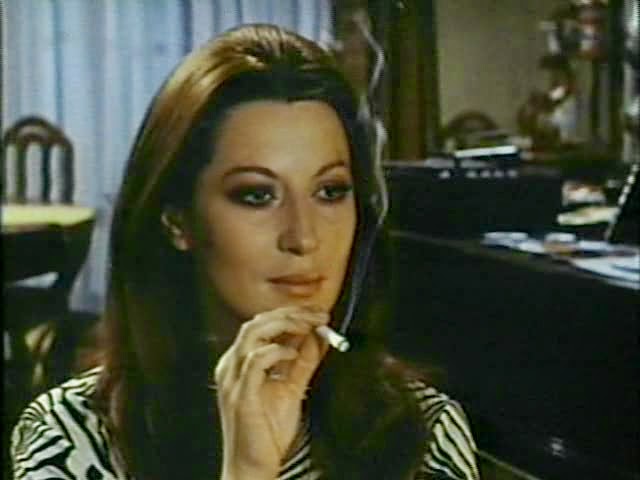
The film’s tagline – “An explosion of sexual frenzy!” – is not quite accurate, but there is plenty of steamy content in Amuck, Silvio Amadio’s penultimate giallo film and certainly his masterpiece. The Italian title, which translated to In Search of Pleasure – a title that’s far more honest about the proceedings – was inexplicably changed to Amuck. Richard and Eleanora, the film’s antagonists, appear to be on an epic search for pleasure and embrace every form of hedonism they can, thanks to Richard’s success as a writer. They engage in a semi-nude party, with the implication that it will result in an orgy, drug use, drinking, swinging, and even shoot their own sex tapes.

The two leading ladies are giallo regulars Barbara Bouchet (Don’t Torture a Duckling) and – perhaps the sexiest woman in giallo history – Rosalba Neri (The French Sex Murders). Not only do these two women give solid performances, but they’re not afraid to take their clothes off and have a very long, slow motion sex scene together that happens before the film’s 15-minute mark. While both women appeared in The French Sex Murders together, they are on top of their collective game (and a few other things) in Amuck. In general, the film doesn’t skimp on nudity and there are several beautifully shot sex scenes, including a flashback sequence showing Greta and Sally kissing naked under a waterfall (no, I didn’t make that up).

Bouchet and Neri are partnered with Strangers on a Train’s Farley Granger, who was fresh off of So Sweet, So Dead (1972) and is possibly at his best here as a truly manipulative bastard. Granger – who I always found to be oddly sexless – appears briefly in one sex scene, but is the ring leader of the increasingly confusing, bizarre events. He and Eleanora play a series of mind games with Greta that are partly fueled by seduction and there is certainly an alluring sadomasochistic bent to the film. It’s easy to get the sense that Richard and Eleanora’s relationship is consummated through these twisted games, as their relationship seems oddly platonic.

This strangely melancholic film has plenty of eerie moments, including flashbacks, potential hallucinations, and the constant entanglement of fiction and reality. The script’s finest element is its use of narrative and story to further the above themes. Greta works as a secretary, transcribing Richard’s latest novel, which turns out to be a mystery/horror tale about a young woman who has taken the job her missing friend once held. He seems to be shaping Greta’s fate as her weaves what is essentially her tale and her active imagination fleshes out the bits of Sally’s story that he does tell her. There is also a bit of a Gothic influence, such as a scene where a storm that knocks the lights out and another where Eleanora’s faints, has some sort of seizure, and begins channeling Sally’s ghost. Nonplussed, Richard explains that she sometimes has psychic episodes (!). Greta’s nighttime wanderings around the old mansion – where she is of course clad in a see-through negligĂ©e – feel like an improvement on Umberto Lenzi’s exploration of this theme in earlier films like Orgasmo, So Sweet… So Perverse, A Quiet Place to Kill, and An Ideal Place to Kill.

There is not much blood, gore, or violence, but it is used very effectively. The horror and suspense are primarily a psychological, as Richard and Eleanora’s games are a total mindfuck for Greta, who is refreshingly not as innocent as she’s first made out to be. Keep an eye out for Umberto Raho (The Bird With The Crystal Plumage) as the supremely creepy butler, who is responsible for some of the film’s sense of unease. As far as the violence goes, this is maybe the only giallo film where duck hunting plays a surprisingly serious role. Though it seems ridiculous, this idea is actually easy to swallow as soon as Rosalba Neri confidently begins handling a shotgun – which is oddly rather sexy – it’s easy to believe that she a crack-shot and could convincingly pose a threat to the clueless Greta.

Amuck comes highly recommended and is one of the more sadly under-rated efforts. It’s a fantastic blend of sexual intrigue, competent murder mystery, and giallo film that has nary a wasted moment. Amuck deserves its own fancy-pants special edition release, but instead, there’s only a basic DVD available for now. Hopefully it will get picked up on Blu-ray sometime this year.

Monday, May 18, 2015

SO SWEET, SO DEAD aka RIVELAZIONI DI UN MANIACO SESSUALE AL CAPO DELLA SQUADRA MOBILE

Roberto Bianchi Montero, 1972
Starring: Farley Granger, Sylva Koscina, Silvano Tranquilli

In a small town in southern Italy, a maniac begins killing local women, all wives unfaithful to their husbands. After mutilating them, he leaves them fully or partially nude with pictures of their indiscretions on top of their bodies. Stressed out Inspector Capuana is new to the area and was hoping for a more relaxing assignment, but he’s put on the case. Though he has few leads, he realizes that all of the victims are married to prominent members of society – businessmen and politicians. The killer is seeking to expose corruption within Italian society and he soon begins taunting Capuana directly, determined to put every obstacle in the Inspector’s way.

Director Roberto Bianchi Montero’s lurid example of giallo, which literally translates to Revelations of a Sex Maniac to the Head of the Police Squad aka The Slasher is the Sex Maniac, opens with a scene that sets the tone for the whole film: a naked, bleeding, and mutilated woman is examined by police, who swarm around the scene. The camera lingers luridly over her nudity and if you’re squeamish about such things, So Sweet, So Deadly is not the film for you. This film is certainly in the running for “Most Sex and Nudity in a Giallo,” along with Ferdinando di Leo’s Slaughter Hotel from the same year. There is actually another, hard to find version of the film titled Penetration, which includes hardcore porn inserts (!!!). Montero actually went on to helm porn and erotica (Caligula’s Hot Nights, anyone?), but star Farley Granger was so enraged by the admittedly misleading publicity – he does not appear in any of these added hardcore sequences (but look out for Harry Reems) – that he sued and had Penetration removed from U.S. distribution.

I still find it a little dizzying that Farley Granger – who I associate with ‘40s and ‘50s American thrillers like They Live By Night (1948), Rope (1948), and Strangers on a Train (1951) – actually had a career in Eurocult films like this, Visconti’s Senso (1954) and totally bonkers giallo films The Red Headed Corpse (1972) and Amuck (1972). Granger is seriously, stately, surprisingly mustachioed, and grim alongside the faintly ridiculous black-gloved, black facial stocking and fedora-wearing killer, with whom he develops an adversarial relationship. It takes him outside of the bounds of by-the-books police work and provides for a wonderful twist ending and a bleak final note.

The film is packed with likely suspects, including a perverted morgue attendant who gropes the female corpses and giggles wildly while on the job. In a somewhat tragic scene, he admits to Capuana that he lives alone and doesn’t have a girlfriend, because no women will stick around when they learn about his profession. Others include a high-priced lawyer, a shady politician, and more. The murders themselves are not overtly stylized, but they are rather misogynistic, as the killer happens to catch the women when they are in a state of undress, awaiting their lovers, and he viciously (if repetitively) slashes their throats and breasts and stabs them in the abdomen. Unlike many other giallo films, the kill scenes are shown on camera rather than implied, and a few are quite graphic.

While it’s easy to read So Sweet, So Dead simply as another misogynistic horror film, the real vitriol is directed at political corruption, hypocrisy, and media manipulation. The killer is punishing powerful men – and seemingly the institution of upper class marriage – by killing the unfaithful wives. There is not a single happy, loving relationship depicted on screen and sexual coercion, infidelity, voyeurism, and malicious gossip are practiced all the way through the town’s different economic classes. This sort of uncomfortable mean-spirited flavor is reminiscent of the nastier giallo films of Lucio Fulci, like Don’t Torture a Duckling and New York Ripper, where no one can be trusted and everyone has a base motivation.

Available uncut on region 2 DVD from Camera Obscura, So Sweet, So Dead comes highly recommended. This exceptionally trashy film is not for everyone, but I think it’s delightful. Granger gives a solid, if exhausted performance and while he seems out of sync with the film’s fast-paced, sleazy first half, it soon catches up to his grim mood and offers up a number of surprises that elevate this film to near-classic giallo status.

Friday, May 15, 2015

DELIRIUM aka DELIRIO CALDO

Renato Polselli, 1972
Starring: Mickey Hargitay, Rita Calderoni, Raul Lovecchio

Dr. Herbert Lyutak has a dark secret. He likes to pick up nubile young women and murder them, because it’s the only way he can get a sexual charge. His beautiful, devoted wife – who is willing to put up with a good amount of pain and sadism – finds a bloody shirt in the wash, but keeps it a secret. Herbert is able to remain at large for some time – possibly because he works as a criminal psychologist consulting the police on complex murder cases – but he is eventually recognized by a witness and turns himself in. He is imprisoned, but the murders continue and the police – and Herbert himself – are at a complete loss. Did he really commit the crimes?

That synopsis is only just a taste of the pleasures to come in Renato Polselli’s (The Vampire and the Ballerina, The Reincarnation of Isabel) Delirium, possible the only giallo title to accurately reflect what the film is about. I can only loosely call this a giallo film, but it’s so spectacular that I would be remiss not to include it in my current series. At its heart, this is basically an utterly perverse, demented love story – sort of amour fou meets giallo and Eurocult. It’s basically impossible to discuss this element without giving away some SPOILERS. Marcia -- expertly played by Rita Calderoni (The Reincarnation of Isabel) – is not the typical giallo wife, as she is hopelessly devoted to her husband despite his faults. It is Marcia who begins killing after Herbert’s arrest in order to clear his name. But she is not a calculating killer. She’s descending rapidly into madness during – and perhaps because of – these sequences.

Though it is rare, some giallo films do resolve the central mystery by fingering two killers (I think it would be rude to cite examples), Delirium makes a surprising move by revealing the film’s killer moments into the film – and then also revealing that Herbert is a police department consultant. The fact that he works for the police is a nice early twist and was fairly uncommon back in the early ‘70s – though now, thanks to Manhunter, Silence of the Lambs, Dexter, and an endless stream of serial killer-obsessed crime dramas, it’s common knowledge that some killers feed off a connection to the investigation of their own murders.

This marks a rare performance from the handsome, Hungarian-American former Mr. Universe and ex-Mr. Jayne Mansfield (and father of Law & Order SVU’s Olivia Benson), Mickey Hargitay. He had a short film career, appearing in a few B-movies with Mansfield, as well as some horror movies like The Bloody Pit of Horror and Lady Frankenstein. Personally, I would have liked to see him in more of these and he really gives it his all in Delirium. He’s not the greatest actor, but there’s something about him that hovers between likable and unsettling, which works perfectly here as Herbert is a thoroughly sympathetic murderer. He wants to stop killing and willingly turns himself into the police.

While the first half of the film follows Herbert very closely, Marcia becomes the central figure of the film’s second half and Polselli brilliantly follows her into madness. He makes it clear that unfulfilled desire at the root of both Herbert and Marcia’s varying forms on insanity. Their close, deeply romantic relationship can never be consummated, which drives them both to obsession and murder. Wracked with guilt and repressed lust, Marcia has sex-fueled visions that are among the film’s visual high points. She and Herbert also engage in some effectively hot S&M scenes and these become increasingly more hysterical and hallucinatory as the film progresses.

Delirium comes very highly recommended. It’s certainly not for everyone, but it’s my favorite kind of movie. Not only does it live up to its title and include a lot of scantily-clad women, but it is particularly leg-friendly and basically everyone except Herbert sports a miniskirt of some kind. There’s also a wonderful array of wacked-out side characters, including the typically inane, useless police inspectors, a maid who follows Herbert around and masturbates, and Christa Barrymore in a role that must be seen to be believed. It’s sad that she only appeared in two films (this and Polselli’s follow up, The Reincarnation of Isabel, which reunites much of the cast of Delirium).

Available on DVD, there are actually two versions of the film, the international release – which has more sexual content – and the American version, which includes a weird subplot about how Hargitay is a Vietnam vet and the trauma drives him to kill. It completely nixes the masturbating maid. While it’s fairly standard for European horror films of this period to have a different cut for American audiences, the two version of Delirium are so different that it’s impossible to really say which is the definitive version, though I obviously prefer the European cut.

Thursday, May 14, 2015

THE RED QUEEN KILLS SEVEN TIMES aka LA DAMA ROSSA UCCIDE SETTE VOLTE

Emilio Miraglia, 1972
Starring: Barbara Bouchet, Ugo Pagliai, Marina Malfatti, Sybil Danning

Two young sisters, Kitty and Evelyn, are seen fighting over a doll when a family heirloom – a painting of two women known as the Red Queen and the Black Queen – possesses Evelyn and she violently stabs the doll, decapitating it. Their grandfather explains that the two girls are part of a family curse, where every 100 years the Red Queen will possess one sister who is destined to kill seven people, ending with her other sister. As adults, Kitty and her other sister, Franziska, become alarmed when a murderer stalks their family mansion. Kitty, who accidentally killed Evelyn in a fight months before, becomes convinced that her sister has risen from the grave to get the Red Queen’s vengeance once and for all.

Director Emilio Miraglia’s two giallo films – The Red Queen Kills Seven Times (also known as The Lady in Red Kills Seven Times) and The Night Evelyn Came Out of the Grave – may not be the most coherent entries in the giallo canon, but they are admittedly two of my favorites. Miraglia reuses the same themes for both films: a mix of colorful ‘70s giallo style blended with more traditional Gothic elements – for instance, most giallo films don’t take place in castles or ancestral mansions – and a hint of the supernatural when he suggests the possibility that the murderer is actually a ghost. I don’t know if there was an Evelyn in Miraglia’s life, but both of these films center around a love/hate obsession with a woman by that name.

While both films have plenty of lovely, scantily clad ladies, The Red Queen Kills Seven Times is certainly more female-centric and the male characters more or less fade to the background (or are rapidly killed off). Bond girl and giallo regular Barbara Bouchet (Don’t Torture a Duckling, Caliber 9) shines as the appealing protagonist haunted by guilt and stalked by a killer. While many giallo films focus on helpless heroines trying to stay a step ahead of a black-gloved killer, I tend to prefer the more complex characters to the outright damsels in distress (a la films like Forbidden Photos of a Lady Above Suspicion). Bouchet’s Kitty falls somewhere between these defenseless characters and the ball-busters often played by Nieves Navarro. For much of the film she’s wracked with guilt about having killed her sister, but she also seems relieved that Evelyn is gone.

Her relationship with her two sisters is complicated and it’s never explained why they were raised by their grandfather instead of their parents. Kitty works as a photographer at a fashion agency and the atmosphere there – full of beautiful, competitive women – somehow mirrors her childhood and home life. The use of models and fashion was popular throughout giallo (thanks to Mario Bava’s seminal Blood and Black Lace), as it allows for numerous built-in scenarios where attractive women are half-nude, nude, or wear a variety out absolutely outrageous outfits. The film makes Kitty less of a sexualized object than her peers because she is a photographer, rather than a model, though this is also used in other ‘70s films like Baba Yaga and Eyes of Laura Mars.

Despite the film’s frequent ridiculous moments, Miraglia effectively conveys the suspenseful atmosphere and keeps us guessing about Evelyn’s identity. There are some great kill sequences, including one where a woman is impaled on a wrought iron fence, and somewhere the visual of a red-caped figure running through tombs and around dark corners is effective. Though this is something of a spoiler, it becomes quickly apparent that even though some people seem to recognize Evelyn in a sketch of the killer – Miraglia even shows a few glimpses of the killer’s face – the killer is wearing an effective and creepy mask. Miraglia also includes a dream sequence, eerie flashbacks, and an excellent chase sequence through the family castle, which is rapidly transformed into a palace of claustrophobic horrors.

Most giallo films have a cast of wholly unlikable characters, something The Red Queen Kills Seven Times fortunately doesn’t succumb to. There are certainly lots of moral gray areas: Kitty herself is a murderer and her sister Franziska (icy giallo regular Marina Malfatti, who is quite entertaining here) comes across as some sort of lazy opportunist waiting for her share of the fortune, while the agency’s models are eager to stab each other in the back. Fascinatingly, the male characters are almost all hamstrung by physical or mental obstacles. Kitty’s grandfather is in a wheelchair, her boyfriend is in financial and romantic limbo thanks to his insane wife, who is kept in an asylum, Franziska’s husband has a pronounced limp, a former agency boss is impeded by a notorious sexual fetish, and Evelyn’s old boyfriend is a pale, sweaty drug addict blackmailing Kitty for money.

It’s hard for me to list The Red Queen Kills Seven Times’ faults, though I know they exist. Miraglia makes a mess of a the plot, as with The Night Evelyn Came Out of the Grave, but the film is just so much fun that it comes highly recommended. Between a likable cast, some great style that veers dramatic from Gothic splendor to swinging ‘60s/’70s, and some truly delightful sequences, there’s a great score from Bruno Nicolai ties the whole thing together. It’s on DVD, but out of print, and I’m really, really hoping for a blu-ray box set of Miraglia’s two films plus plenty of exciting special features.

P.S. The Red Queen does not actually kill seven times, but I will leave you wondering whether it's more or less.

Wednesday, May 13, 2015

THE CASE OF THE BLOODY IRIS aka PERCHÉ QUELLE STRANE GOCCE DI SANGUE SUI CORPO DI JENNIFER?

Giuliano Carnimeo, 1972
Starring: Edwige Fenech, George Hilton, Giampiero Albertini, Oreste Lionello

"Murder isn't a joke, you idiot!"

A killer is loose in a fashionable apartment complex, stalking beautiful young women. When a model, Jennifer (Edwige Fenech), and her ditzy friend move in to a recently vacant apartment in the building, Jennifer becomes the murderer’s latest target. Is the killer her violent ex-husband, who often turns up unannounced, or one of the complex’s suspicious tenants, including a predatory lesbian and her strange, violin playing father, a nasty old woman who reads horror fiction, or the handsome architect with a blood phobia?

While The Case of the Bloody Iris is not often listed among the more serious, suspenseful giallo classics, it’s hard to deny the infectious fun and nonsensical plot developments of this often unintentionally comic shocker. Originally known as What are Those Strange Drops of Blood on Jennifer’s Body?, this is essentially a vehicle for giallo goddess Edwige Fenech, an Algerian-born French-Italian actress with wide eyes and a voluptuous figure. She got her start in a series of sex comedies, but went on to star in Bava’s Five Dolls for an August Moon (1970), The Strange Vice of Mrs. Wardh (1970), All the Colors of the Dark (1972), and many more. She was primarily seen in director Sergio Martino’s thrillers, and began her career as his brother and producer Luciano Martino’s fiancĂ©e.

Another of the film’s major personalities is writer Ernesto Gastaldi. One of the greatest and most prolific writers of Italian cult films, he’s responsible for everything from Werewolf in a Girl’s Dormitory (1961) to The Horrible Dr. Hichcock (1962), The Whip and the Body (1963), The 10th Victim (1965), The Sweet Body of Deborah (1968), Forbidden Photos of a Lady Above Suspicion (1970), The Strange Vice of Mrs. Wardh (1971), and many more – perhaps more genre films than any other Italian writer. His influence on the genre is incalculable. One of Gastaldi’s common themes is used here: A vulnerable female protagonist begins to psychologically unravel when an unseen killer stalks her and those around her – including the police, lovers, and friends – believe that she’s either losing her mind or making the whole thing up.

The film’s plot is not particularly memorable – possibly because Gastaldi used it so often during this period – but its charm exceeds the basics of acting, plot, or style. There is more of an emphasis on style than gore or suspense, though there are some solid chase sequences and murder set pieces. The Cast of the Bloody Iris is often funny – intentionally and unintentionally so – and the real reason to watch it, aside from Fenech, is the incredible dialogue, which must be heard to be believed. My personal favorite is: “Don’t thank me just yet. Wait till I try to make it with you, then you’ll see what a bastard I am.” This line is spoken, of course, by George Hilton, giallo cinema’s most enduring romantic hero and misogynist asshole. Fenech’s regular love interest throughout a number of giallo films, he is given a bit of suspicious intrigue here when it’s revealed that he has a blood phobia, not that this particular plot thread is ever resolved.

Like many giallo films, it’s also hard to compete with the eye-catching and hilarious opening sequence, which essentially summarizes the best and worst qualities of The Cast of the Bloody Iris. A high-end prostitute has her throat slashed in the apartment’s elevator by an unseen assailant in a seen that must have influenced De Palma’s Dressed to Kill. The elevator doors reveal her dead body to some tenants, including an older man and woman, and a model/stripper. The three seem more inconvenienced by the body than anything else and the stripper, named Mizar, rushes off to rehearsal. It’s unclear whether she is a model or some sort of sex worker – in the next scene, two other characters discuss using her in a photo shoot because she’s, “black, but not too black” (!). Later, she works as a night club dancer and her performance ends in her wrestling in the buff, where she takes a man violently to the ground.

There are red herrings galore and while most giallo films have a few unrelated subplots to thicken the intrigue, The Case of the Bloody Iris is simply awash with them. If the film succeeds in anything, it’s making Jennifer’s environment constantly threatening with a tinge of sexual menace. There is a hint of cult activity, an aggressive lesbian neighbor, and a mean old lady who finds horror fiction delightful and calls Jennifer a “filthy whore.” Her violent ex-husband often turns up unannounced – no one else seems to take this seriously – and the police are totally useless. The Commissioner is more concerned with his stamp collection than the increasing number of corpses. Best of all is perhaps her roommate, Marilyn, who makes fun of the murders and plays some unfortunate (though hilarious) practical jokes.

The Case of the Bloody Iris comes recommended to anyone who loves Eurocult. It’s lack of seriousness will probably be off putting to someone expecting a Dario Argento film, but this sort of wackiness is the reason I love the giallo genre so much. The dialogue is absolutely priceless, the performances are endlessly entertaining, and there’s a solid score from Bruno Nicolai. Available on DVD, I can’t really say that this is a genre classic, but it’s certainly up there among the most light-hearted and enjoyable entries.

Tuesday, May 12, 2015

THE FRENCH SEX MURDERS aka CASA D’APPUNTAMENTO

Ferdinando Merighi, 1972
Starring: Anita Ekberg, Rosalba Neri, Evelyne Kraft, Howard Vernon

Antoine, a thief on the run, takes refuge in a local brothel and demands the attentions of his favorite whore, who is later found dead. Though swearing he is innocent, Antoine’s lack of alibi and notoriously violent temper lead to his arrested and he is convicted of murder. But when he dies during an escape attempt, the murders continue and the bodies begin to pile up, leaving plenty of work for the frustrated Inspector Pontaine, who has quite a lineup of suspects, including the brothel’s madam and a young scientist.

This Italian-West German production was originally titled Casa d’appuntamento (House of Appointment), but is also known as The Bogeyman and the French Murders and Paris Sex Murders. It’s honestly one of my favorites among the lesser known giallo and benefits from a great cast, including Anita Ekberg (La dolce vita) just before her performance in Killer Nun, giallo and Eurocult regular Rosalba Neri (Lady Frankenstein), Evelyne Kraft (Lady Dracula) in her first role, and Bond girl and giallo regular Barbara Bouchet (Don’t Torture a Duckling) in an all-too-brief scene. Howard Vernon (The Awful Dr. Orloff) – Jess Franco’s greatest male star – steals the film as a demented scientist determined to protect his daughter’s assets. And last, but certainly not least, is Robert Sacchi (The Man with Bogart’s Face), a Humphrey Bogart lookalike who plays the stoic inspector. The campiness of his early films is always a treat, though he surprisingly gets more screen time than the film’s bevy of scantily clad ladies.

The French Sex Murders is completely off the wall in every way possible and will disappoint anyone looking for a more serious, suspenseful, or straight forward giallo. The film blends in many Eurocult tropes – most of which can be found in Jess Franco movies – including a nightclub scene where Rosalba Neri gives an alluring performance singing to a raucous crowd. Howard Vernon’s scientist is responsible for some of the gross out moments, such as one where he is using a sheep’s eye for an experiment and mashes it up with a scalpel. The violence – from effects master Carlo Rimbaldi – is relatively over the top, with a body thrown off the Eiffel Tower, lots of stabbings, throat-slitting, decapitation, and an absurd scene where Antoine viciously beats a prostitute (Barbara Bouchet!).

While most giallo films represent the police as comical or ineffectual, this has a detective protagonist. And like My Dear Killer, from the same year, the loose plot outline is the same: the inspector follows a trail towards prospective murderers and continues on as each one of them is killed in turn. As I mentioned, there are numerous suspects connected to the case, though the scientist’s assistant – who is also having a secret affair with his beautiful daughter – is positioned to be the likely killer for almost the entire second half of the film. Of course this is an obvious red herring. Though I won’t give away the identity of the killer, it’s not too hard to figure out by the second half of the film. In a twist not all that common to giallo films, the murderer’s motivation is an obsessive incestuous passion – the height of trash cinema plot developments, in my opinion.

French Sex Murders isn’t going to please a lot of people, but for sheer entertainment value, it comes recommended. Thanks to the folks at Mondo Macabro, it’s available on DVD. This release is the longest and most complete available print – apparently versions of the film differ by country of release, with some actors getting more running time depending on where the film was released. There’s no true definitive version, but this disorienting, though very fun mess is the best you’re going to get. At the bare minimum, there are enjoyable effects from Carlo Rambaldi, a score from Bruno Nicolai, and a Eurocult Hall of Fame cast – for instance, where else are you going to find naked Eurobabes running around a brothel, a Humphrey Bogart wannabe, squished eyeballs, and one of Europe’s finest cult actors, Howard Vernon , together?

Monday, May 11, 2015

MY DEAR KILLER aka MIO CARO ASSASSINO

Tonino Valerii, 1972
Starring: George Hilton, Marilu Tolo, William Berger, Patty Shepard

Inspector Luca Peretti is called in after an insurance investigator is mysteriously decapitated by construction vehicle. But by the time he locates the truck driver, the man is found hanging in an apparent suicide. Peretti believes there is more to the story, but the more he investigates, the bodies begin to pile up. He finds his way to a cold case, a double murder involving the starvation of a kidnapped young girl and the death of her father, who was attempting to rescue her. The girl seems to be the crux of the mystery and he works effortlessly to find out who kidnapped her before another murder occurs.

My Dear Killer is a notable entry in the flood of giallo films released in 1971 and 1972, thanks in part to a stunning opening where a man is painstakingly decapitated by the jaws of a truck send to dig up a quarry. There is some pretty adventurous violence throughout, including a memorable murder where a woman is subjected to power tools and a marble statue. Unlike the typical giallo, this film frankly races through suspects and the killer manages to beat Peretti to many of them, increasing his sense of frustration and the film’s feeling of paranoia and conspiracy.

The film’s main weakness is that it essentially alternates between moments of stylized violence – and of course the killer wears black leather gloves – and some talk-heavy investigative scenes. There is a lot about this that feels like a police procedural and the inexplicable ending has Peretti gather up the suspects — a la Agatha Christie’s Hercule Poirot or The Thin Man films — to reveal who is the killer by analytically going over the clues. Peretti is fortunately far from the useless, doltish cop found in most giallo films and is charming and at times funny, though Valerii regrettably spends a bit too much time on his complicated love life (which is in no way connected with the murders). This is one of Uruguayan star and giallo regular George Hilton’s earliest giallo roles, and one of the few giallo films he starred in not directed by Sergio Martino. He’s fantastic here, as always.

Like Who Saw Her Die?, Deep Red, and Don’t Torture a Duckling, My Dear Killer is one of the few giallo films focused on child murder. In this case, it’s a particularly horrifying story of a little girl from a wealthy family who was kidnapped and then left to starve to death. As in the somewhat later Deep Red, a child’s drawings wind up being a central clue. The film is full of a number of unsavory characters, including one or two men who are suggested to be pedophiles. The entire family is pretty unlikable and, in true giallo fashion, there’s plenty of sleaze to go around.

My Dear Killer is enjoyable, but far from perfect. Despite all the action, murders, and disreputable characters, the film suffers from some lagging pacing. All the dialogue-heavy scenes of investigation weigh things down and it was obviously difficult for Valerii to compare with the great and completely unexpected opening, though he keeps the identity of the secret a mystery for as long as possible, thanks in no small part to the many characters who seem inherently guilty. And if you’re expecting all the plot points to be resolved by the end of the film, you’re absolutely going to be disappointed.

This is maybe not the best place to start for giallo newbies, but it’s pleasantly entertaining and will be particularly enjoyable for fans of Italian poliziotteschi — police procedurals that are sort of action-packed precursors to modern crime dramas like Law & Order. Keep an ear out for an anxiety-inducing score from the always excellent Ennio Morricone, who churned out a dizzying number of giallo film scores during the early ‘70s. My Dear Killer is available on DVD and is a must-see for anyone who loves George Hilton as much as I do.