Friday, May 27, 2016

TALES THAT WITNESS MADNESS

Freddie Francis, 1973
Starring: Donald Pleasence, Joan Collins, Kim Novak

One of the final horror anthology films in Amicus Productions’ relatively extensive series that includes Dr. Terror's House of Horrors (1965), Torture Garden (1967), The House That Dripped Blood (1970), and Tales from the Crypt (1972), among others, Tales That Witness Madness feels like the last gasp effort that it undeniably is, but for some reason that didn’t prevent me from enjoying it. Like their later portmanteau movies, this is structured around events that unfold in a house: this time, an asylum where Dr. Tremayne (a strangely subdued Donald Pleasence) is showing four unique cases to another doctor (Jack Hawkins), individuals that he has strange theories about…

The first tale, “Mr. Tiger,” is one that I perhaps should hate, because it centers around a child, but I oddly found myself enjoying it despite its flaws. Paul (Russell Lewis) finds it easy to ignore the increasingly uncomfortable relationship between his parents (Georgia Brown and Donald Houston), because he has a new friend, one who just happens to be a ravenously hungry invisible tiger. There’s something about this that reminded me of my absolute favorite episode of The Night Gallery, “Silent Snow, Secret Snow,” and despite this entry’s sillier moments, there’s something chilling about an invisible friend that craves bones and raw meat — not to mention the fact that this is really story about a child’s attempts to deal with emotional abuse, something not explored enough by genre cinema. I wish the creature had been more nebulously described, but then I think I’m the target audience for something like Rawhead and Bloody-Bones (a disturbing English/Irish folklore that you should definitely look up if you’re unfamiliar) rather than your average predator from the animal kingdom.

“Penny Farthing,” the second entry, is probably my least favorite of the bunch. Timothy (Peter McEnery), is psychically coerced by a menacing portrait of a man he refers to as “Uncle Albert” (Frank Forsyth), who gets on an antique bicycle (the titular penny farthing), which transports him back into time. Yes, you read that right. In both present and past timelines, his girlfriend Beatrice/Ann (both played by Suzy Kendall of The Bird with the Crystal Plumage and Torso) is in some sort of danger, but honestly, the less said about this one, the better. Maddeningly, every time Uncle Albert was mentioned, the Paul McCartney song popped into my head and refused to leave for several days, which might explain some of my animosity towards this entry.

My favorite of the anthology is the creepy “Mel,” where a man (Michael Jayston) fond of turning nature into art objects, brings home a very strange looking dead tree, which has some feminine attributes. His wife (Joan Collins, in one of her best short roles) hates the tree, which becomes known as “Mel,” thanks to a carving on the trunk, and it seems that a competition is emerging between she and the sculpture. This premise is a lot less stupid than it actually is and there’s something genuinely unsettling about the tree in a way that reminds me of the type of weird horror found in the stories of Algernon Blackwood and Arthur Machen. There is a also a bizarre sexual element and this might just be the only horror anthology tale to flirt with dendrophilia. 

The final tale, “Luau,” incredibly features Kim Novak (even more incredibly, apparently replacing Rita Hayworth) as a literary agent whose newest client, a handsome Hawaiian celebrity named Kimo (Michael Petrovich), seems to be falling in love with her daughter Ginny (Mary Tamm). But during a luau held in Kimo’s honor, he plans a ritual sacrifice that involves far more than some meat from the local butcher shop… Though this one has been panned quite a bit by critics over the years, I will never not be enchanted by Novak, who ended a lengthy career break for god knows what reason to film this. She isn’t given much to do here, but she and Petrovich are plenty entertaining and the segment has a few pleasantly grisly moments. And, again, it must be one of the few instances in horror cinema of ritual sacrifice taking place during a Hawaiian luau party.

I’m not going to spoil the conclusion of the framing device, which is a bit nonsensical, but suffice it to say that Pleasence should be allowed to chew the scenery more than he does. Overall Tales That Witness Madness can be recommended more as a curio than a particularly knock-out example of the horror anthology film, but there’s assured if workmanlike direction from the wonderful Freddie Francis, and an usual, bold script from lovely actress Jennifer Jayne (The Crawling Eye, They Came from Beyond Space, The Medusa Touch) and it’s nice to see such a break with the studio’s anthology conventions. If you’re a British horror fanatic, as I am, you’ll find plenty to love and it’s definitely worth watching if you enjoy portmanteau genre films but tire of the same old formulas. Pick it up on Blu-ray.

Wednesday, May 25, 2016

Daughters of Darkness: Episode 6

The fifth episode of the podcast I'm co-hosting is now up!

From the Diabolique site:


In the sixth episode of Daughters of Darkness, Kat and Samm continue on to the third part of their four-episode discussion of the work of director Andrzej Zuławski. They start out looking at Zuławski’s two loose Dostoyevsky adaptations, La femme publique (1984) and L’amour braque (1985). La femme publique, inspired by Dostoyevsky’s novel Demons, follows a young, inexperienced actress who is cast in a film adaptation of Demons and begins a relationship with the controlling director, while political violence and conspiracy erupts around them. L’amour braque, Zuławski’s first film with his long-time partner Sophie Marceau, is an adaptation of The Idiot and focuses on a strange young man named Léon, who gets caught up with a criminal gang and falls in love with the leader’s girlfriend. 


Finally, they explore two of Zuławski’s most neglected films, Mes nuits sont plus belles que vos jours (1989) and Boris Godounov (1989). Mes nuits sont plus belles que vos jours again stars Sophie Marceau as a troubled young performer in a traveling psychic act. She begins a complicated relationship with a computer programmer suffering from a disease that affects the language center of his brain. Boris Godounov is a unique musical production in Zuławski’s catalogue and is a particularly frenzied adaptation of Mussorgsky’s classic Russian opera about the disastrous reign of a man believed to have murdered the child of the former tsar. 

Wednesday, May 18, 2016

MADHOUSE


Jim Clark, 1974
Starring: Vincent Price, Peter Cushing, Robert Quarry, Adrienne Corri

In a lot of ways, Madhouse marks the end of an era. A coproduction between American company American International Pictures and British studio Amicus Productions, it didn’t perform particularly well in the box office, possibly because it's a particularly campy blend of comedy and horror, quite divergent from Amicus's portmanteau films or their generally grim, realist-themed features like The Psychopath or What Became of Jack and Jill? It was also one of the very last horror films for both AIP and Amicus. For the latter studio, it came hot on the heels of anthology films Tales That Witness Madness and From Beyond the Grave, and it was followed by just one horror title, The Beast Must Die. It was also Vincent Price’s last horror film until The Monster Club (1981) several years later, though Madhouse is sadly his last starring role in a genre film.

Though somewhat inferior to the similarly themed AIP title Theatre of Blood, Madhouse is a fun film that is lovable despite its faults -- and, at least for me, seems to get better with each viewing. The glorious Price stars as Paul Toombes, an aging actor who stars in a horror film franchise. His character, Dr. Death, is at the height of his popularity and Toombes is about to marry his lovely costar. On the night of their engagement party, his fiancee is murdered. Toombes is suspected, but instead of being formally charged, he is committed to a mental hospital for having a breakdown. Years later, he re-emerges from the hospital and tries to start up his career again, but the murders resume. Has Toombes totally cracked? Or is someone setting him up?

This is a rare Amicus production starring Price and, like most of their films, is entertaining despite its flaws. Admittedly, this feels far more like an AIP production and even lacks the theme of a despicable central character being punished for their transgressions. Though Toombes is so full of himself as to be unlikable, he has really become the unfortunate target of a much more dangerous, homicidal adversary. These themes of paranoia, conspiracy, and narcissism are balanced by some delightfully cheesy moments. Overall, the plot doesn’t go out of its way to make a whole lot of sense, but that hardly matters and there is still a lot to like about the film. There are some beautiful, vividly-colored set pieces (in typical AIP fashion) that manage to be both creepy and campy at the same time. Though light on plot and believability, Madhouse is like a fond farewell to the glory days of Price, AIP, and even Amicus. It has a lot of great moments of meta-theatricality and in-jokes for fans of Price’s earlier horror films, which should endear it to the actor's die-hard fans.

Madhouse also benefits from a great cast. There's an appearance from the sexy Linda Hayden, a young British actress known for her genre work in the '60s and '70s, such as Taste the Blood of Dracula and Blood on Satan’s Claw before she moved onto sex films. There are also great cameos from Peter Cushing as a pathetic writer and Robert Quarry (Count Yorga, Vampire) as a sleazy producer. Quarry is even forced to make an appearance in his Count Yorga costume, which is a nice in-joke for genre fans. Scream queen Adrienne Corri (A Clockwork Orange, Vampire Circus) also pops up as a crazy spider lady who lives in a spooky old house and, in my opinion, she's one of the best elements of the film.

Price is fittingly sad as the pathetic, confused Toombes. He clearly doesn't know whether or not he has been committing the murders and this keeps the suspense (and humor) going. There is also a nice twist at the end of the film and Toombes’ attempts to investigate only serve to get him into more trouble. As I mentioned, there are numerous references to Price’s earlier horror films with AIP and some of them are actually shown as clips in place of the Dr. Death films, while others are echoed in the death scenes, all taken from Toombes’ films. 

Director Jim Clark was better known as an editor and made his career working on films such as one of Britain’s finest, The Innocents (1961), the Hitchcockian Charade (1963), Bond film The World is Not Enough (1999), and many more. His work here is competent and assured and it's a shame that it was only one of very few films he helmed as a director. Madhouse was loosely based on Devilday (1969), a novel by Angus Hall. In it, Toombes’ character is far more unpleasant and lacks the charming, sympathetic qualities Price brought to the film. While this is more in line with Amicus's themes, I believe I prefer the film as it is, with Toombes ultimately winding up a pathetic, if begrudgingly likable figure who is victimized by a far more sinister force.

Madhouse is available as a single disc split feature with Theatre of Blood and in the same format as part of the MGM Vincent Price Scream Legends box set. It comes recommended, particularly if you want a creepy comfort film light on actual scares, but heavy on the black comedy. I've really come to love this film, primarily because of the outrageous interplay between Price and Cushing -- who have lost none of their vim and vigor by this point and engage in a real battle of scenery chewing -- as well as the colorful side roles by some true '70s horror luminaries.

Sunday, May 15, 2016

AND NOW THE SCREAMING STARTS

Roy Ward Baker, 1973
Starring: Peter Cushing, Herbert Lom, Ian Ogilvy, Stephanie Beacham

A newlywed couple, Catherine and Charles Fengriffen, can’t seem to escape a curse visited upon Charles’s bloodline thanks to the horrible actions of one of his debaucherous ancestors. Of course it is the innocent and impressionable Catherine who must suffer in her husband's stead and everything from phantom rape, hauntings, and diabolical pregnancy is visited upon her. Though Charles loves her, he steadfastly refuses to believe her claims, though everyone around them drops like flies. A knowledgeable, sympathetic doctor comes from the city to help Catherine with a difficult pregnancy and is the only one who seems to believe her, but can he get to the bottom of the Fengriffens’ supernatural problem before it's too late?

While Amicus primarily released anthology films, And Now the Screaming Starts was one of their few single narrative feature films. While most of these — such as The Deadly Bees, The Psychopath, and What Became of Jack and Jill? — have modern day settings, this title fits in with Amicus films like The Skull and I, Monster in the sense that it has the lush period setting monopolized by Hammer, but includes far seedier and more lurid subject matter. Essentially a curse has been visited upon the family because Henry Fengriffen (the dashingly smarmy Herbert Lom) takes it upon himself that it’s his right as lord of the manor to rape a servant’s wife on the couple’s wedding night. When the servant tries to defend his bride, he has a hand lopped off for his troubles. And of course there is something unpleasant in the the curse that says it will be visited upon a virgin Fengriffen bride; Charles’ mother was not, conveniently allowing his generation to side step the problem.

Certainly one of the most bombastic titles of British ‘70s horror, And Now the Screaming Starts is based on the novel Fengriffen by David Case. The plot retreads familiar enough group that it isn’t going to really surprise any horror devotees, but — as with many of the Amicus films — it goes out of its way to tick off a number of horror tropes and goes out with a surprisingly morbid ending, the type almost never used by Hammer. Between the sexual violence and the fact that Catherine is terrorized almost nonstop for 90 minutes, anyone expecting the restrained parlor room horror that turns some genre fans away from Hammer might be pleasantly surprised.

The cinematography and costumes are lovely, but the script is unfortunately lackluster, as is the case with many of these stand-alone Amicus plots. It's definitely worth seeing for fans of Peter Cushing, who plays the cultured city doctor who sort-of-kind-of-not-really saves the day (and nearly saves the film), or Stephanie Beacham, who is lovely as always as Catherine Fengriffen and far less annoying than she is Dracula A.D. 1972. The film was helmed by the great Roy Ward Baker,  responsible for some of my favorite British horror of the ‘70s, and his direction is assured, making the most of a string of supernatural attacks that don’t quite deliver as much suspense as they should. Whether this flaw is due to their need to compete with Hammer or merely difficulty finding a solid writing team — American novelist Robert Bloch was generally responsible for the studio’s best scripts, but he popped in and out over the years — I can’t really say.

While this counts as a pleasant way to spend a rainy afternoon and would make a nice addition to an evening of Gothic horror, it's not quite on the required viewing list. It’s not nearly as silly as The Beast Must Die — another late period, stand-alone film from Amicus — and simply can’t compete with the frenzied furniture chewing found in Madhouse thanks to the collaboration between Peter Cushing and Vincent Price. But overall, I do think it’s a neglected entry in the studio’s canon and one that will probably find a few unsuspecting fans. Check out the Dark Sky single disc DVD.

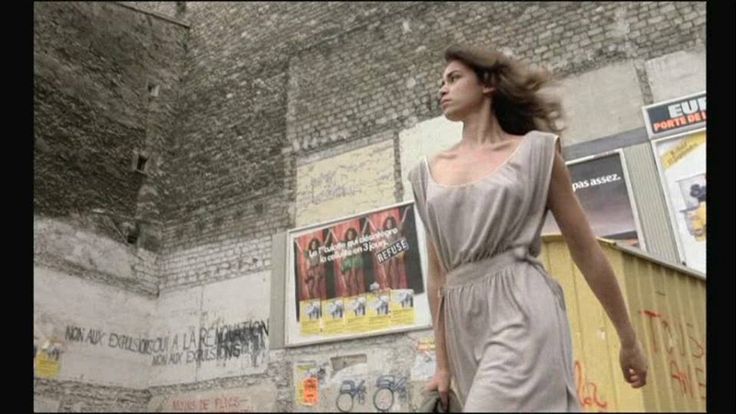
LA FEMME PUBLIQUE (1984)


While literary inspiration played a prominent role in the early career of Polish director Andrzej Zuławski — resulting in outright adaptations in the case of his first two short television films,
 Pavoncello (1969) and The Story of Triumphant Love (1969), as well asL’important c’est d’aimer (1975) and his rudely interrupted production of On the Silver Globe (1988) — possibly his most ambitious attempt came at the midpoint of his career with La femme publique (1984). Co-scripted by French writer Dominique Garnier, the film is an adaptation both of Garnier’s memoirs of her early years in Paris, and of Dostoyevsky’s chaotic, reactionary opus from 1872, Бесы (Bésy) aka Demons. (Though it is often translated as The Possessed, I’ve decided to go with the more literal title, partly because “possessed” is misleadingly passive in the context of the novel’s plot.) This might seem like a fundamental contradiction — as Garnier’s memoirs focus on themes of femininity, sexuality, and art, while Dostoyevsky’s novel is a hysterical meditation on political violence — but it’s a contradiction that is not only key to understanding the film but lies at the heart of much of the director’s output in the ‘80s and ‘90s.

La femme publique
 follows Ethel (Valérie Kaprisky), a model and actress auditioning for a part in an upcoming filmic adaptation of Dostoyevsky’s Demons. Despite her inexperience, she is hired by the charismatic yet abusive young director, Lucas Kesling (Francis Huster), a Czech émigré working in Paris. They begin a complicated sexual relationship as the production gets underway, and the stress of both causes Ethel to slowly lose touch with reality. She also finds herself drawn to Milan (Lambert Wilson), another Czech émigré who mistakes her for his missing wife, Elena (Diane Delors), a role Ethel willingly accepts. But she comes to believe that Elena may have been murdered and it seems Milan has been drawn into a plot of political violence.

On the surface level, La femme publique has some of Zuławski’s cinematic signatures: it essentially focuses on a tortured love triangle and it deals with the lives of artists. But — like The Devil and On the Silver Globe — it can be frustratingly abstruse and cannot be seen as a direct adaptation of Dostoyevsky’s novel, but rather something of a spiritual successor. Never an easy director to pin down in terms of genre, where some of Zuławski’s earlier films experimented with elements of the horror genre — such as The Third Part of the NightThe Devil, and Possession — La femme publique abandons that approach for a blend of drama, romance, and political thriller that simply can’t be classified.
Perhaps intentionally, this has parallels to Dostoyevsky’s complex maneuvering inDemons, which is also a dizzying blend of genres, themes, and subplots. James Goodwin wrote, in Confronting Dostoevsky’s Demons: Anarchism and the Specter of Bakunin in Twentieth-Century Russia, “Demons is not a historical novel in any traditional sense, but a complex, hybrid entity that combines elements of separate, unfinished projects into a synthetic ‘chronicle’ of political conspiracy. It is a work, moreover, in which suicide, rape, grisly murder and sadism mix rather unexpectedly with comedy and even buffoonery” (3). Like Dostoyevsky, Zuławski divides screen time between two major (though overlapping) plots with terrorism and political violence as a strong subtext. I think a grasp on the novel and its themes is key to understanding the film, far more so than Garnier’s memoirs, for instance.
And as with Zuławski’s final film, Cosmos (2015), he was ahead of the curve with his choice of source material. Goodwin explains that Demons was actually one of Dostoyevsky’s least popular works for the majority of the twentieth century, particularly in Soviet countries, and it was not widely read until several years after the release of La femme publique. He wrote, “the novel’s circulation in Russia did not begin to meet popular demand until the final years of perestroika, which saw the first separate edition of Demons in nearly a century. Over the next six years, from 1989 through 1994, Russian publishing houses produced at least eighteen new editions of Demons” (1). This was largely due to the difficult and controversial nature of the book, which is packed with scalding indictments of political violence, terrorism, and the open-ended, ineffectual sort of leftism that made the book just as relevant in the 1970s as it was in the decade of its release, the 1870s.
Demons initially follows two aged friends, the failed academic Stepan Verkhovensky and his demanding benefactress Varvara Stavrogina, and the goings on in their small town. But it soon comes to focus on their respective, somewhat estranged sons, Pyotr Verkhovensky and Nikolai Stavrogin. While the younger Verkhovensky is involved in some sort of underground revolutionary organization, Stavrogin is the subject of much gossip about his scandalous behavior, which includes a possible affair with the beautiful Lizaveta Tushina and a secret marriage to the mentally unstable Marya Lebyadkina, who is essentially the town fool. Verkhovensky is devoted to Stavrogin, but cultivates a group of young co-conspirators and even a local following that includes the governor’s wife. His scheming results in chaos at a town ball, arson, and a dizzying number of murders that climaxes with Stavrogin’s suicide.
In Demons, Dostoyevsky describes the terrorists led by Verkhovensky as “nihilists,” though this isn’t really accurate but reflects the political climate in Russia in the 1860s. In Margaret Heller’s essay, “Dostoyevsky on Terror and the Question of the West” inTerror and the Arts: Artistic, Literary, and Political Interpretations of Violence from Dostoyevsky to Abu Ghraib, she explained, “The thought that terrorism and nihilism belong together is not a new one, for there is a close connection between the history of the two terms, both in their origins in late eighteenth-century Europe and in their elaboration during the nineteenth century in Russia. They were, in fact, coined roughly in the same period, the time of the French Revolution. A connection between the philosophy of nihilism and the politics of terror was made by Joseph de Maistre, a Catholic conservative, who argued that the former’s assertion of human freedom from authority had, as its necessary consequence, the latter. Maistre’s denunciations of theophobia, ‘the insurrection against God,’ nihilism (rienisme), and any belief in political progress due to human enlightenment, were especially influential in Russia as the result of his period of exile in that country” (84-85).
Demons was actually inspired by influential anarchist Michael Bakunin and the revolutionary Sergei Nechaev, particularly the relationship between the two men, Nechaev’s crimes, and his later trial. Heller wrote, “Nechaev was a particularly unscrupulous figure, who had managed to charm Bakunin, and he became the model for the character Peter Verkhovensky” (87). There are strong parallels between the two, namely a talent for manipulation, a tendency to turn on collaborators, and murder. Little in the way of actual terrorist actions occur in the novel, though, and much of the conspirators’ time is devoted to verbal conjecture and secret meetings, with one important exception. Heller wrote, “They possess no common ideology, but rather display a range of theoretical positions. Their leader, Peter Verkhovensky, decides to solidify the loyalty of his followers by having them participate in the killing of one of their number whom Peter has falsely accused of treachery, just as Nechaev did in real life” (89).
As in the novel, the use of political terrorism in the film is murky and constantly overlaps with the events of the characters’ private lives, particularly their fraught romantic relationships. Zuławski’s films are frequently described as hysterical and while this is really too limiting of a description, he certainly captures the spirit of hysteria and frenetic energy that is at the heart of Demons. The novel’s somewhat anonymous narrator relates the conspirators’ reaction to a certain scene — an act of arson that temporarily covers up a double murder — that sums up the spirit of the film as well: “’It’s all incendiarism! It’s nihilism! If anything is burning, it’s nihilism!’ I heard almost with horror; and though there was nothing to be surprised at, yet actual madness, when one sees it, always gives one a shock.”
Though it is relatively restrained, Zuławski does weave his own tale of political violence in with Dostoyevsky’s. Kesling explains that he wants to adapt the novel because it is “a prophetic tale about those who try to change the world through violence,” and in a strange way he becomes the embodiment of both Stavrogin and Verkhovensky. Zuławski selects key scenes from Demons to include as the film-within-a-film and the majority of these have to do with political content. The scene of one of Verkhovensky’s meetings is brilliantly filmed as a sweaty match in an indoor tennis court, where it is declared that “murder, blackmail, extortion, bombs” will be added to their agenda, and a list of people to be killed should be drafted immediately.
In addition to this film-within-a-film, Zuławski makes clever use of television broadcasts and media, a technique he would return to for La fidélité (2001). This is where Ethel learns of the murder of a woman with gold high heels who has had her fingerprints burned off with acid —who she believes is Kesling’s former lover, Elena, that he has murdered and whose identity she will soon come to accidentally assume — as well as the assassination of the Archbishop. The man is shot to death while getting into a car at a party given in his honor, which is seen on TV with a glimpse of Kesling in the frame. It is implied that the director not only filmed, but also orchestrated, this event.
Ethel also physically takes part in this sense of escalating violence: barely 20 minutes into the film, she and Kesling are caught a riotous protest in the streets, she and Milan are later involved in car chase which ends in a shootout and an explosion, and Zuławski lingers over the filming of a key concluding scene from Demons, where the character Shatov is shot in the head and executed. It’s important to note that Milan is essentially a stand in for Shatov and the two have an overwhelming number of similarities.
And just as Dostoyevsky was reacting to Russian radicals in the nineteenth century, soLa femme publique is a reaction to the revolutionary leftism that grew out of what is now known as the New Left. A loose movement in the ‘60s and ‘70s that resulted in much positive change — including advances in civil rights, gay rights, women’s rights, and freedom of speech — it also had a perhaps inevitably violent side. What began, for many, as a sort of post-Marxist protest against Stalinism, the Cold War, and the war in Vietnam, among other things, resulted in mass student protests in England, France, Germany, and the US. This led to the Prague Spring in Czechoslovakia in 1968 and Parisian uprisings the same year that effectively shut down the city and even, temporarily, the national government, as well as rioting in Poland that resulted in deaths and extensive property damage.
But this took an even darker turn in the ‘70s and early ‘80s with the emergence of several radical, militant groups working throughout Europe, many of whom were responsible for wide-scale terror campaigns: assassinations, kidnappings, bombings, arson, attacks on embassies, airplane hijacking, and even bank robberies. Organizations like the German Rote Armee Fraktion, the Irish Republican Army, and the Popular Front for the Liberation of Palestine — and its most visible member, Ilich Ramírez Sánchez aka Carlos the Jackal — were instrumental in shaping contemporary understandings of terrorism.
Polish philosopher Leszek Kołakowski, who, like Zuławski, was kicked out of the country and forced to emigrate west, wrote often about the contradiction at the heart of leftism, particularly how the idea of utopia could so quickly become a fascistic quest for personal power for a select few. In “The Concept of the Left,” he wrote, “A utopia, if it proves so remote from reality that the wish to enforce it would be grotesque, would lead to a monstrous deformation, to socially harmful changes threatening the freedom of man. The Left, if it succeeds, would then turn into its opposite—the Right” (147). It seems to be this violent, ugly transformation that Zuławski is attacking in La femme publique. Certainly in later interviews, he was deeply critical of anyone that supported such organizations, directing a fair amount of vitriol towards German director Rainer Werner Fassbinder, who was rumored to have financially supported the Rote Armee Fraktion.
As in Demons, these historical organizations, and La femme publique, the central revolutionary figures seem to be on more of an underhanded quest for power than really desiring any long-lasting societal transformations. Merriam-Webster defines terrorism as “the systematic use of terror especially as a means of coercion.” While Kesling is ultimately revealed to be secretly orchestrating a political assassination, he also uses these principles on his film set and in his private relationship with Ethel; coercion, humiliation, violence, and even blackmail become regular occurrences. He says to her, “You’re mine. I made you. I can take you back or send you back whenever I want.”
Mary McCarthy’s sentiments on Verkhovensky in “Ideas and the Novel: Dostoevsky’s ‘The Possessed’” for the London Review of Books could easily be applied to Kesling. She wrote, “The only demon is Verkhovensky, who believes in nothing, has no ideas or principles. If he is an Idea, which I wonder about, it is an idea without specific content – a principle devoted (but not dedicated) to destruction. He is aware of a lack in himself, which is why he turns to Stavrogin. The nucleus needs a centre, and he himself cannot be that, for he is not within but without – a manipulator and strategist.” But the words of Joyce Carol Oates, writing about Demons for The Georgia Review, also ring true for Zuławski’s fictional director: “A demonic frenzy is loosed about him and through him, yet Stavrogin is dying of boredom. Like Raskolnikov in his cramped cell of a room, Stavrogin, though he wanders through Europe, though he makes a pilgrimage to Mount Athos, and visits Egypt, and even Iceland, goes nowhere at all: he is suffocating, doomed.”
In uniting the two figures of Stavrogin and Verkhovensky within one character, Kesling, and fleshing out the romantic angle, Zuławski draws an elegant if jarring parallel between the themes of the two books that inspired La femme publique. On one hand, there is the story of the Pygmalion-like relationship between a megalomaniacal director and an inexperienced actress who is objectified almost to the point of farce; on the other, a tale of political violence orchestrated by a nihilistic fantasist. And just as Stavrogin commits suicide at the end of the novel — leaving a note that says, “No is to blame, I did it myself” — Kesling actually hangs himself while filming the same scene. But, very much unlike the events of Demons, Zuławski’s first major female protagonist is left standing, theoretically in control of her own destiny.

Originally written for Diabolique.

Thursday, May 12, 2016

ASYLUM (1972)

Roy Ward Baker, 1972
Starring: Peter Cushing, Britt Ekland, Robert Powell, Herbert Lom

One of Amicus’s final horror anthology films is this underrated effort set in a mental institution, in which a prospective new doctor, Dr. Martin (Robert Powell), is set with a challenge that will determine his employment. The former head of the asylum, Dr. Starr, is suffering from a mental breakdown and a case of split personality. Martin must interview several patients and correctly work out which one is Starr. While stylistically similar to Amicus’s previous films, Asylum is a breath of much needed fresh air, because it abandons the formula used on all the studio’s previous portmanteau films. In efforts like Tales from the Crypt, The House That Dripped Blood, Torture Garden, and Vault of Horror, a group of strangers come together and learn their potential fates – typically from an ominous, possibly supernatural figure – only to be told at the conclusion that they are already dead (and presumably in hell).

In the first story, “Frozen Fear,” a female patient (Barbara Parkins) tells Dr. Martin about how she came to be in the hospital. Her married lover (Richard Todd) killed his wife — after surprising her with the gift of a large freezer in the basement, which she is implausibly thrilled by — not realizing that her recent foray into voodoo will ensure she returns from the grave, even after being dismembered. Though this one has some amusing elements, it’s actually the weakest of the bunch and asserts, with very few exceptions, the fact that British studios should just never dabble in tales of voodoo and Afro-Caribbean magic. Admittedly, though, I was relieved by two things. First, this tale made it easy to assume that a certain tone was set for Asylum, which was blissfully not true; secondly, that the studio didn’t blow their load all at once, as were, by putting the anthology’s best story first, as is the case with many of their other portmanteau films.

The second, far superior tale, “The Weird Tailor,” is one of Asylum’s best. A downtrodden (and almost humorously Dickensian) tailor (Barry Morse) is wondering how he will pay the rent when a mysterious customer (Peter Cushing, in excellent form) suddenly comes into his shop and commissions a new suit. Made of strange material and to a set astrological timetable, it becomes clear to the tailor that there’s something odd about the suit, which even absorbs a stray drop of blood, leaving behind no stain… Though the tone of this second chapter is far different from the first, it does introduce a theme that would run throughout Asylum, another element lacking in the studio’s earlier anthology films. Every story has to do, in some form or another, with the animation of uncanny anthropomorphic figures: a corpse, a mummy, robotic figures, an imaginary person, etc. While American novelist Robert Bloch wrote many of these scripts for Amicus, the stories in Asylum were largely based on his own tales and I wish this unified theme was something the studio had thought to bring to their earlier works.

The next story, “Lucy Comes to Stay,” is another of my favorites thanks to the completely unexpected presence of the radiant Charlotte Rampling. She stars as Barbara, a woman returned home to live with her brother (James Villiers) after a stay in an asylum. She is frustrated with her brother’s uncertainty about her mental health and his insistence that she be monitored by a nurse (Megs Jenkins). But soon her mischievous friend Lucy (the lovely Britt Ekland of The Man with the Golden Gun and The Wicker Man) convinces her that what they really need to do is get out of the house…

Rampling is excellent, as always, and it’s a real treasure to see she and Ekland playing off of each other. They’re an example of the film’s incredibly solid cast, which includes Cushing (in “The Weird Tailor”), Patrick Magee as the stern, unforgiving doctor who demands that Dr. Martin find the real Starr, and the great Herbert Lom, who is fantastic in the last episode, “Mannikins of Horror.” In a spin on James Whale’s Dr. Pretorius in The Bride of Frankenstein, Lom plays Dr. Byron, a madman who is experimenting with what he calls “soul transference,” where he intends to send human consciousness to small humanoid robots. The effects are undeniably silly in this one, but it’s weirdly effective thanks to Lom’s delivery.

While most of these Amicus anthology films have predictable endings, I’m not going to ruin this one for you. It’s not at all obvious who is the real Dr. Starr — and there are many worthwhile contenders — but the film’s conclusion probably won’t be all that much of a surprise. Still, I remember not being overwhelmingly fond of it this one, but revisiting it has really changed my mind. If you find Tales from the Crypt to be uneven, or even just a one-trick pony, definitely give Asylum a shot. Hell, it’s worth it just to see Charlotte Rampling lose her marbles. Pick it up on DVD.

Daughters of Darkness: Episode 5

The fifth episode of the podcast I'm co-hosting is now up!

From the Diabolique site:


In the fifth episode of Daughters of Darkness, Kat and Samm continue on to the second part of their four-episode discussion of director Andrzej Zuławski. This time they discuss his work in the late ‘70s and early ‘80s, when he was forced to leave Poland over the controversy surrounding his film The Devil (1972), which was banned by the communist government. His first French film, L’important c’est d’aimer (1975), which really launched his career in Europe, featured an international cast including Romy Schneider, Fabio Testi, and Klaus Kinski. Set in the worlds of soft and hardcore pornography, as well as avant garde theatre, it explores the tragic love triangle between a struggling actress and a photographer. 


This is followed by a lengthy discussion of On the Silver Globe (1988) — a surreal sci-fi epic based on a novel written by his own uncle — a film he returned to Poland to make after the success of L’important c’est d’aimer. But after a costly and intensive shoot that was nearly complete, the Polish government canceled this production and Zuławski wasn’t able to complete it for another decade. It remains unfinished, though it was recently restored. The episode concludes with a look at Zuławski’s most famous film, Possession (1981), an unsettling work about the dissolution of a marriage in divided Berlin starring Sam Neill and Isabelle Adjani.